Maximising a Small Exhibition Booth Space: The 2026 UK Professional Guide
A 3x3m shell scheme isn’t a limitation; it’s a precision-engineered opportunity to outshine the sprawling island stands next door. Whilst many exhibitors feel overshadowed by the massive budgets of custom builds, the secret to maximising a small exhibition booth space in 2026 lies in the strategic use of high-impact fabric graphics and slim-profile hardware. We understand the frustration of managing clutter in a compact footprint or the difficulty of choosing between traditional rigid panels and modern textiles. You need a stand that attracts footfall and reflects your brand’s quality without feeling cramped or chaotic.
This professional guide will show you exactly how to transform a modest footprint into a high-performance brand experience. We’ll explore why silicone edge graphics (SEG) are the ultimate solution for creating a flush, architectural finish that eliminates the bulk of traditional displays. From integrating fabric light boxes that add perceived depth to adopting the minimalist layouts currently favoured by 2026 UK event attendees, you’ll discover how to command attention. This is your roadmap for achieving a professional, spacious finish that ensures your brand remains the most memorable presence on the exhibition floor.
Key Takeaways
- Learn how to analyse foot traffic patterns to strategically position your primary graphics for maximum visibility.
- Discover why silicone edge graphics (SEG) are the premier choice for maximising a small exhibition booth space whilst maintaining a slim, architectural profile.
- Understand how to use illuminated fabric displays to add perceived depth and dimension to a compact 3-metre footprint.
- Master minimalist composition techniques that ensure your brand message is communicated effectively within the crucial three-second window.
- Compare the practical benefits of different substrates, from durable Foamex boards to versatile pop-up displays, for various campaign requirements.
Strategic Planning for Compact Exhibition Footprints
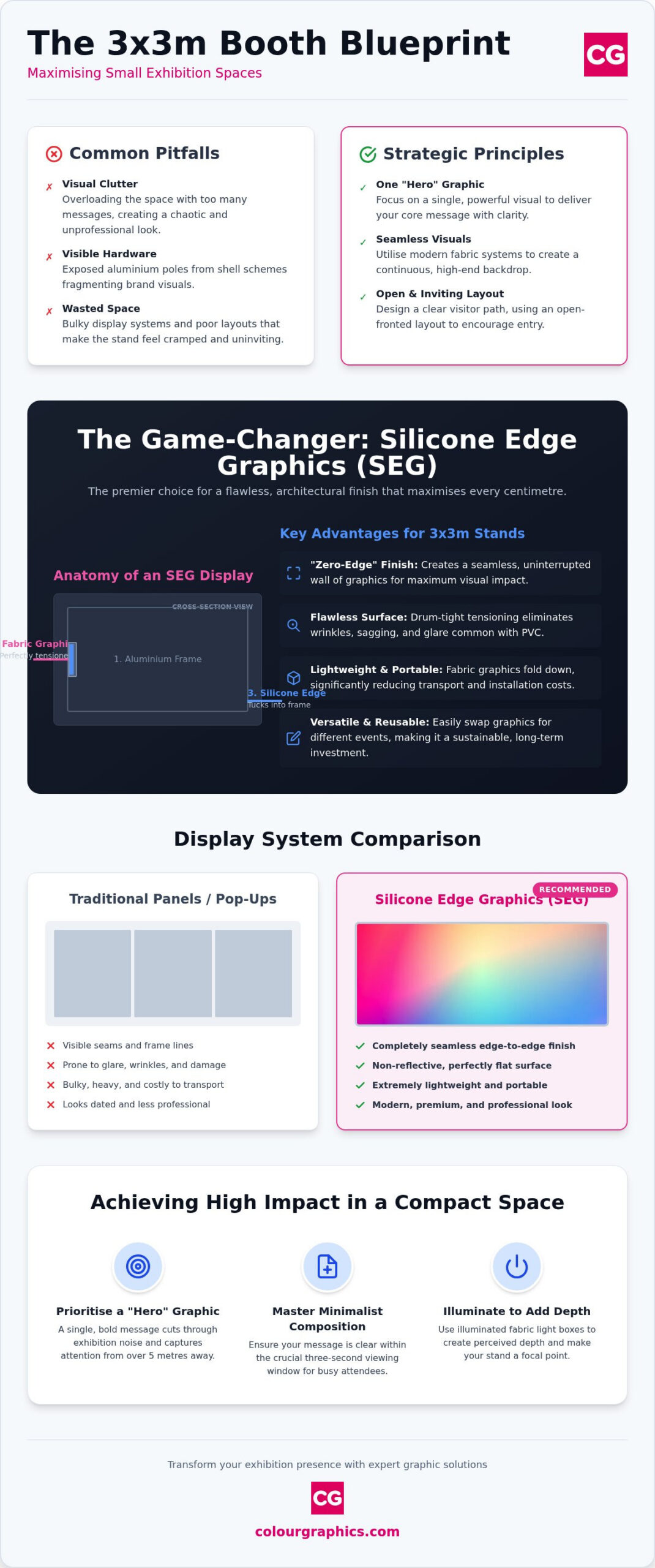
Success on the trade show floor isn’t determined by your square footage; it’s defined by the clarity of your intent. When maximising a small exhibition booth space, the psychology of focus must outweigh the desire for volume. Busy attendees are bombarded with visual noise, so a stand that attempts to say everything often ends up saying nothing at all. By applying established visual merchandising principles, you can create a high-impact zone that prioritises a single, powerful “hero” graphic over a cluttered collection of smaller messages. This “less is more” philosophy ensures your brand remains a calm, authoritative centre amidst the chaos of a national exhibition.
Precision is your greatest ally. In 2026, UK venues maintain strict regulations regarding stand heights and boundaries. Accurate measurements are critical, especially when working within the rigid confines of a shell scheme. Even a few millimetres of discrepancy can cause fabric graphics to sag or rigid panels to overlap awkwardly. You need a perfect fit to project professional reliability. Analysing foot traffic flow is equally vital. Position your primary graphic where it meets the eye of visitors approaching from the main hall entrance, ensuring your value proposition is visible from at least five metres away.
Understanding Shell Scheme vs Space Only
Most small-scale exhibitors utilise a shell scheme, which typically involves a pre-built aluminium frame with infill panels. The primary constraint here is the visible aluminium uprights. These poles interrupt your branding and can look fragmented. We suggest using seamless fabric graphics to mask these uprights entirely. This creates a continuous, high-end look that mimics a custom-built stand. Whether your booth is a mid-row unit or a corner orientation, your planning must account for these structural pillars to ensure your branding remains uninterrupted and professional.
Mapping the Visitor Journey in Metres
In a 3x3m space, every centimetre must earn its keep. You don’t have the luxury of a massive reception desk that blocks the entrance. Instead, opt for an open-fronted layout that invites visitors to step onto your footprint without feeling trapped. Strategic movement is essential. You can use floor graphics to subtly direct traffic flow toward your lead-capture points or key product displays. Position your primary engagement area away from the main exit to prevent bottlenecks. By mapping the journey in metres, you ensure a fluid experience that feels spacious and entirely under your control.
Leveraging Silicone Edge Graphics (SEG) for Seamless Branding
Silicone Edge Graphics (SEG) represent the pinnacle of modern display technology for the 2026 professional. At its core, SEG is a high-resolution dye-sublimated fabric graphic finished with a thin silicone strip sewn directly into the edge. This strip allows the fabric to be tucked into a recessed groove on a slim aluminium frame. The result is a perfectly tensioned, drum-tight surface that eliminates the distracting wrinkles and glare often found in cheaper PVC alternatives. When you are maximising a small exhibition booth space, these technical details matter. They provide a polished, high-end finish that suggests a custom-built presence even on a modest budget.
The “Zero-Edge” design is perhaps the most significant advantage for compact stands. Traditional modular systems often rely on thick, visible frames that eat into your usable floor area. SEG frames are remarkably thin; they sit flush against the wall of your shell scheme or stand structure. This allows you reclaim every possible centimetre for visitor interaction. By following expert advice on small booth layouts, you can use these flush-fit graphics to create a sense of openness. They don’t just save space; they also offer the flexibility of interchangeable graphics. You can swap brand messages between show days in minutes, making them ideal for multi-day national campaigns.
The Anatomy of an SEG Display
The precision of the fit comes from the silicone bead locking securely into the aluminium extrusions. This creates a finish that is vastly superior to traditional roller banners, which can lean or curl at the edges over time. Fabric also offers a massive logistics advantage. It’s lightweight and foldable, which significantly reduces transport costs and simplifies the move-in process at busy UK venues. You aren’t hauling heavy, rigid boards; you’re carrying a high-impact brand experience in a compact bag.
Maximising Wall Surface Area
One of the most effective ways to dominate a small footprint is to use large format fabric to create a single, unbroken brand wall. Fabric is widely considered the premium alternative for high-end indoor events because it absorbs light rather than reflecting it. This ensures your graphics remain legible under harsh venue spotlights. For corner booths, we can wrap the fabric around the frame to create a continuous visual flow that guides the eye naturally. If you want to elevate your presence, investing in Silicone Edge Graphics is the logical next step for your planning phase.
Creating Depth and Dimension with Illuminated Fabric Displays
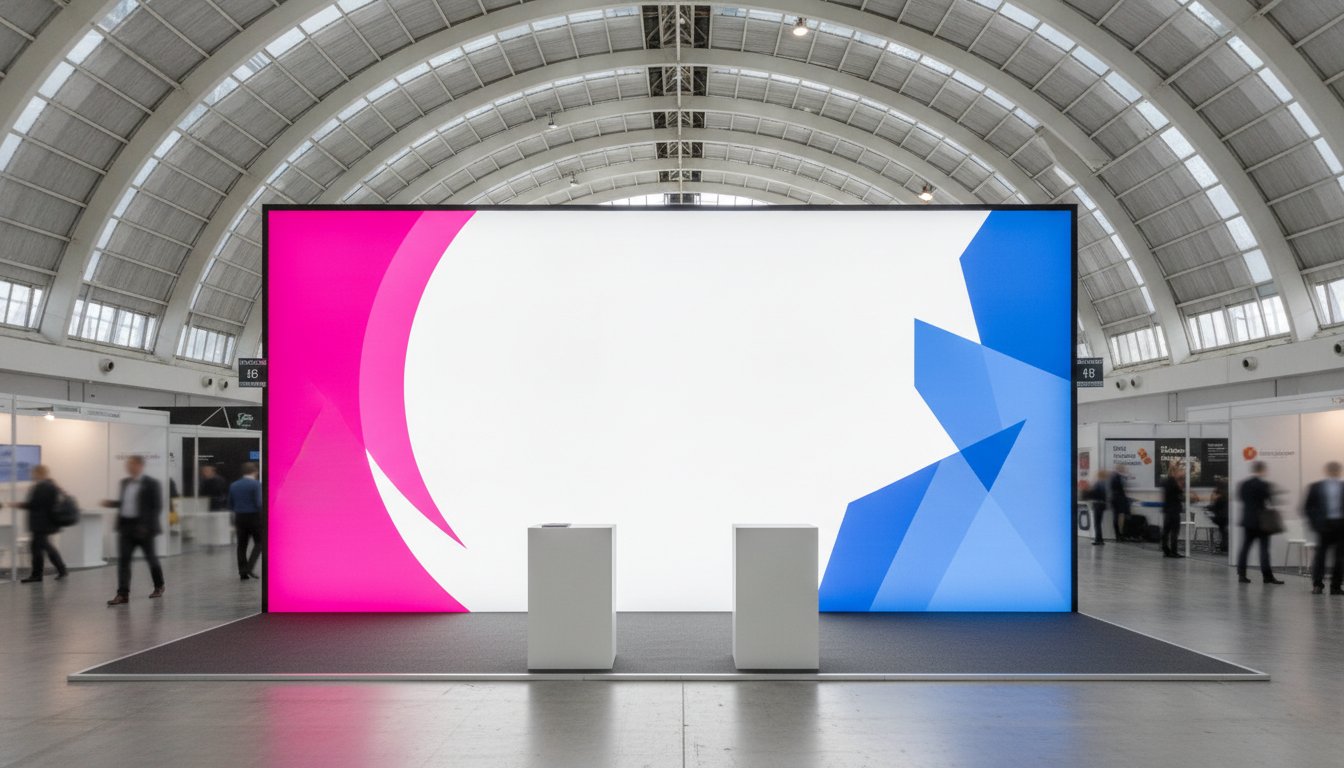
Light is more than a utility; it’s a structural tool for spatial manipulation. When maximising a small exhibition booth space, internal illumination offers a significant advantage over traditional external spotlights. Traditional arm-lights are often bulky and protrude into the narrow aisles of a trade show, creating physical obstacles and harsh, unflattering shadows. In contrast, integrated LED light boxes eliminate this clutter entirely. By housing the light source within the frame, you reclaim the air space around your booth whilst ensuring your graphics are perfectly legible from every angle. This creates a clean, architectural finish that commands respect in a crowded hall.
The science of backlighting also plays a vital role in human perception. A flat, unlit wall acts as a visual dead-end, but a backlit fabric surface creates a psychological sense of depth. This luminosity makes a standard 3-metre wall feel significantly deeper, almost like a window looking out rather than a barrier looking in. It’s an effective way to make a compact footprint feel expansive. In 2026, environmental responsibility is a key metric for success; research indicates that 68% of event attendees view a company’s sustainability as a reflection of its competence. Transitioning to energy-efficient LED fabric light boxes aligns your brand with these expectations whilst providing a high-performance visual result.
Choosing the Right Light Box Profile
Precision manufacturing allows for incredibly slimline extrusions that mount directly to shell scheme walls. These profiles provide the glow of a light box without sacrificing precious floor centimetres. If your stand layout is open-ended, freestanding double-sided light boxes can serve as functional room dividers. These units offer branding opportunities on both sides, effectively doubling your messaging area within the same footprint. Use these illuminated zones to highlight specific “call to action” points, guiding visitors toward your lead-capture areas with purposeful brightness.
The Impact of Backlit Fabric
Achieving a professional finish requires specialised backlit fabric designed to prevent “hot spotting.” This is where individual LED bulbs become visible through the graphic, ruining the seamless effect. High-quality backlit textiles diffuse light evenly across the entire surface, ensuring deep colour saturation that pops even under the high-intensity ambient lighting of major UK exhibition centres. This uniform glow turns your booth into a beacon. It draws the eye naturally from across the hall, ensuring your brand remains the focal point regardless of the larger stands nearby.
High-Impact Graphics: Composition and Minimalist Design
In the high-pressure environment of a UK trade show, your graphics have exactly three seconds to convert a passerby into a prospect. This “3-second rule” dictates that your value proposition must be immediate and unmistakable. When maximising a small exhibition booth space, every pixel must serve a specific purpose. Avoid the temptation to fill every square centimetre with text or busy collages. High-contrast, singular imagery often performs better in tight quarters because it provides a clear focal point for the eye to rest upon. Just as minimalist booth layouts with 30-40% more open floor space are becoming more popular for their inviting nature, your graphic design should embrace breathing room to avoid overwhelming the visitor.
You must also think vertically. In a 3x3m booth, visitors, staff, and furniture will inevitably obscure the lower half of your walls. Positioning your primary logo and key messaging above eye level, typically at two metres or higher, ensures your brand remains visible from across the hall even when your stand is busy. This strategic placement uses the full height of the shell scheme to your advantage, preventing your identity from being “lost” behind the crowd. It’s a simple adjustment that significantly increases your visual reach and authority.
Typography and Scale for Small Stands
Scale is a critical factor for professional readability. Your headline text needs to be legible from the aisle, whilst secondary information should be clear for those standing within your booth. We recommend using clean, sans-serif fonts that maintain their integrity at large scales. Because visitors will be inspecting your stand from just a few feet away, the precision of large format digital printing is essential. Any pixelation or blurriness will immediately undermine your brand’s perceived quality and reliability. Centring your message on the back wall ensures it remains the anchor of your composition, regardless of how people move through the space.
Colour Schemes that Expand Space
Colour choice significantly influences spatial perception and visitor behaviour. Cool colours, such as blues and muted greens, are known to make surfaces appear to recede, which can help a small booth feel less restrictive and more expansive. Incorporating ample white space, or “negative space,” is equally vital. It prevents visual fatigue and creates a professional, airy atmosphere that invites engagement rather than causing sensory overload. To maintain a cohesive and high-impact look, ensure you are coordinating your point of sale printing with your main wall graphics. Consistency across all touchpoints reinforces brand authority and provides a seamless experience for the customer.
Ready to elevate your exhibition presence? Contact Colour Graphics today for precision-manufactured display solutions that make a lasting impact.
Selecting Hardware for Maximum Professional Versatility
Choosing hardware is a tactical decision that balances aesthetics with logistical reality. When maximising a small exhibition booth space, your footprint is so tight that every piece of hardware must be either dual-purpose or hyper-efficient. Foamex board serves as a reliable staple for rigid panels that feel permanent and high-quality. It’s particularly effective for shell scheme infills where a sturdy, flat surface is required. Fabric displays, however, have become the modern professional standard for those seeking a wrinkle-free surface that packs down into a single carry bag. This choice often comes down to the frequency of your event calendar and your transport capacity.
Lightweight roller banners offer quick impact for entry-level budgets, but they can’t match the immersive feel of a full fabric wall. We recommend modular SEG frames as the smartest long-term investment for growing brands. These systems are designed to grow with your business; a frame used in a 3x3m booth today can be reconfigured or expanded for a larger space tomorrow. Stability is paramount in high-traffic areas. Ensure your chosen hardware maintains its balance without wide, tripping-hazard feet that encroach on your limited floor area and disrupt visitor movement.
Functional Branding Elements
Success at your next trade show doesn’t require a massive footprint; it requires surgical precision in your design and execution. For technical exhibitors, you can visit Electron Optics Instruments, LLC to see how a focus on precision is reflected in a professional brand presence. By prioritising a “less is more” philosophy and utilising slim-profile Silicone Edge Graphics, you can reclaim valuable floor space whilst projecting an image of premium quality. Remember that maximising a small exhibition booth space is as much about psychological depth as it is about physical dimensions. Integrated illumination and vertical messaging ensure your brand remains a beacon of clarity, even amongst the busiest national events.
As UK-based large format printing experts, we’ve been helping businesses achieve high-performance results since 1980. Our high-precision SEG extrusions are manufactured in-house to ensure the reliability and peace of mind that national brands trust. Don’t let a compact stand limit your vision. With the right hardware and a minimalist approach, your booth will feel expansive and authoritative.
Explore our range of high-impact SEG and fabric exhibition displays and start planning your most successful event season yet. We’re ready to help you transform your footprint into a high-impact brand experience.
Frequently Asked Questions
How can I make my 3×3 exhibition stand look bigger?
You make a 3x3m stand feel more expansive by using internal illumination and minimalist layouts. Integrated light boxes create a sense of depth that draws the eye inward, whilst keeping floor space clear of bulky external lighting. Prioritise a single hero graphic and use cool colours like blues to make walls appear to recede. This strategic approach to maximising a small exhibition booth space ensures your footprint feels inviting rather than cramped.
What is the best material for exhibition stand graphics in 2026?
Stretch fabric used in Silicone Edge Graphics (SEG) is the premier choice for 2026. This material provides a perfectly tensioned, drum-tight finish that eliminates the distracting wrinkles common in traditional media. It absorbs light to prevent glare from venue spotlights and offers superior colour saturation. Because it is lightweight and foldable, it also simplifies logistics for national UK events, ensuring a professional, high-end finish every time you exhibit.
Are fabric exhibition stands better than PVC banners?
Yes, fabric displays offer several professional advantages over traditional PVC banners. Fabric is significantly lighter, making it easier to transport and handle amongst busy trade show crowds. Unlike PVC, which can curl at the edges or develop permanent creases, stretch fabric maintains a smooth, premium appearance. It also provides a non-reflective surface, which is essential for ensuring your branding remains legible under the intense, varied lighting found in major UK exhibition halls.
Can I use a light box in a small shell scheme booth?
You can certainly use light boxes in compact booths by opting for slimline aluminium profiles. These extrusions are designed to mount directly to the shell scheme wall without protruding significantly into your usable floor area. Using illuminated fabric light boxes is an excellent tactic for maximising a small exhibition booth space, as the internal LEDs eliminate the need for bulky external arm-lights, keeping your stand entrance open and clutter-free.
How do I hide the metal poles of my shell scheme stand?
You can completely mask the aluminium uprights of a shell scheme by using seamless fabric graphics. By mounting a continuous SEG frame across the entire width of your booth, you create a flush, architectural brand wall that hides the structural poles entirely. This technique transforms a standard shell scheme into a premium, custom-looking environment, providing a clean and uninterrupted visual backdrop that reflects the high quality and precision of your brand.
What is the standard height for exhibition graphics in the UK?
The standard height for UK shell scheme graphics typically ranges between 2.4 and 2.5 metres, depending on the specific venue and organiser. It’s vital to verify the exact dimensions for each event, as shell scheme systems can vary. For any display exceeding 4 metres in height, you must submit detailed drawings to the organisers at least 45 days before the event for approval, ensuring your stand complies with all venue safety regulations.
How do I transport large format graphics to a national event?
Transporting large format graphics is most efficient when using foldable fabric displays stored in durable transit cases. Unlike rigid boards that require specialist couriers or large vans, fabric graphics can be folded down into compact bags. This significantly reduces your logistics footprint and protects the print from damage during transit. We recommend using hard-shell cases for your hardware extrusions to ensure everything arrives at the venue in perfect condition for assembly.
Is SEG fabric easy to install myself?
Yes, Silicone Edge Graphics are specifically designed for rapid, tool-free installation by your own team. The silicone bead sewn into the edge of the fabric simply pushes into the groove of the aluminium frame. You start at the corners and work your way to the centre, creating a perfectly tensioned surface in minutes. This simplicity provides peace of mind, allowing you to focus on visitor engagement rather than complex or time-consuming stand construction.