Shell Scheme Cladding Options: A Professional Guide to Exhibition Stand Transformation
The standard aluminium frame of a shell scheme might seem like a structural necessity you just have to live with, but it’s actually the biggest barrier between your brand and a premium presence. You likely feel frustrated by unsightly uprights ruining your aesthetics or worry that your graphics won’t align perfectly with specific booth brands. It’s a common anxiety; you want the authority of a custom-built stand without the staggering price tag that usually follows.
This guide explores the most effective shell scheme upgrade ideas to transform your space into a high-impact branded environment. You’ll discover how the latest cladding materials can hide the metalwork and elevate your professional image. We’ll examine the logistical differences between seamless fabric displays and durable rigid media like Foamex. By the end, you’ll have the technical clarity to select a reusable, high-performance solution that ensures your brand stands out on the busiest exhibition floors in the United Kingdom.
Key Takeaways
- Transform a standard exhibition booth into a premium, branded space by using cladding to conceal unsightly aluminium uprights and create a seamless visual environment.
- Explore high-impact shell scheme upgrade ideas by choosing between infill, overlay, or seamless cladding methods tailored to your specific budget and brand objectives.
- Learn the technical differences between rigid Foamex panels and Silicone Edge Graphics (SEG) to balance long-term durability with a crease-free, high-end finish.
- Avoid common logistical errors by identifying your specific shell scheme brand, such as Octanorm or Sodem, to ensure perfect graphic alignment and clip compatibility.
- Ensure a professional result with UK-manufactured graphics that offer faster turnarounds and precise fitment for the fast-paced national event industry.
Understanding Shell Scheme Cladding: Why Aesthetics Matter
A shell scheme is a functional starting point, but it’s rarely a finished brand statement. Shell scheme cladding is the strategic process of covering the standard aluminium pole-and-panel system to create a unified, architectural finish. This technique acts as the bridge between a budget-friendly shell scheme and a high-impact bespoke stand. It allows you to present a polished, uninterrupted facade that communicates authority the moment a visitor enters the hall.
The Problem with Standard Shell Schemes
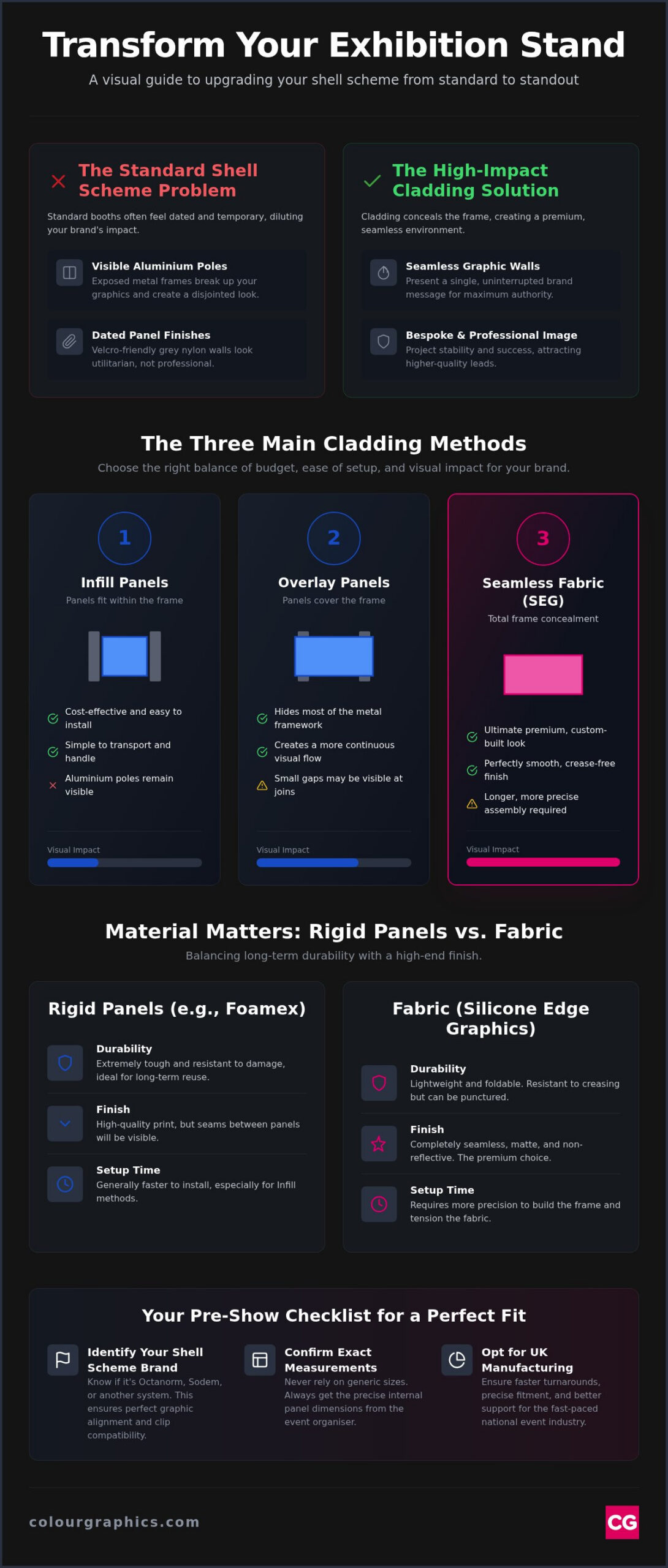
Standard stands typically rely on Velcro-friendly grey nylon walls that feel dated and utilitarian. These panels are separated by exposed aluminium uprights that physically break up your graphics and disrupt your visual narrative. Relying on small A0 posters or pull-up banners often looks cluttered rather than curated. This is why exhibition design professionals focus on concealing the grid. When your brand messaging is sliced into sections by metal poles, the impact is diluted, making your business look like a temporary guest rather than an established industry leader.
The ROI of a Bespoke Appearance
Investing in professional shell scheme upgrade ideas isn’t just about vanity; it’s about commercial performance. A seamless, high-end stand attracts higher-quality leads because it projects stability and success. Whilst some bulky custom builds can eat into your valuable square meterage, modern thin-profile cladding preserves your floor space whilst providing a premium look. These materials are designed for durability and reusability, meaning your investment pays for itself over multiple shows. You aren’t just buying graphics; you’re securing a reusable asset that maintains its integrity through repeated use.
Standing amongst competitors who have settled for the basic look gives you an immediate psychological advantage. A continuous wall creates a sense of scale and permanence that simple panels cannot match. It transforms a standard booth into a professional environment that feels bespoke, ensuring your brand is the one that lingers in the minds of attendees long after the event closes. By implementing these shell scheme upgrade ideas, you transition from being a mere participant to becoming a genuine destination on the trade show floor.
The Three Main Cladding Methods: Infill, Overlay, and Seamless
This emphasis on durability and long-term value is a priority for any business investment, whether for events or permanent premises. For those who also utilise high-performance materials in their physical infrastructure, you can learn more about the best practices for maintaining composite decking to preserve its premium appearance.
Selecting the right application method is the most critical decision in your planning phase. It dictates the final aesthetic, your logistical timeline, and the total investment required. Each approach offers a different balance between cost and visual impact, so understanding the technical nuances of each is essential for a successful transformation.
Infill Panels: Cost-Effective Branding
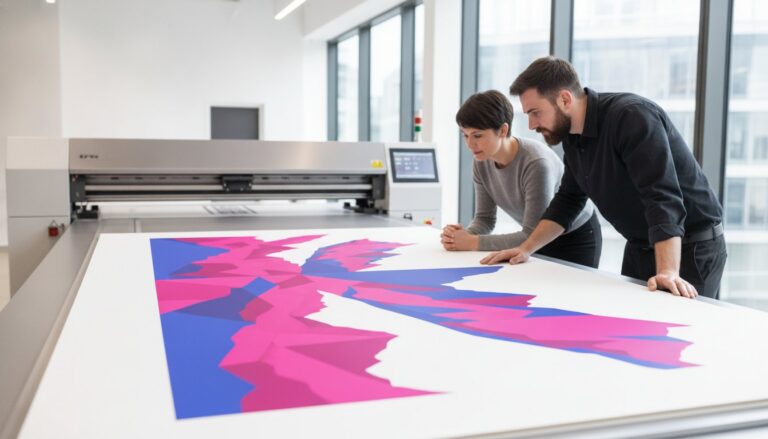
This method involves placing individual panels within the existing aluminium framework. It’s often achieved using foamex board printing to create durable, high-quality inserts that slide or clip into the system. Whilst this is the easiest option to transport and install, it leaves the aluminium poles visible between each graphic. It remains a popular choice for exhibitors working with very tight budgets or venues with strict regulations regarding stand modifications. If you need a reliable, professional look without a complex setup, infill panels provide a clean and structured appearance.
Overlay and Seamless: Hiding the Framework
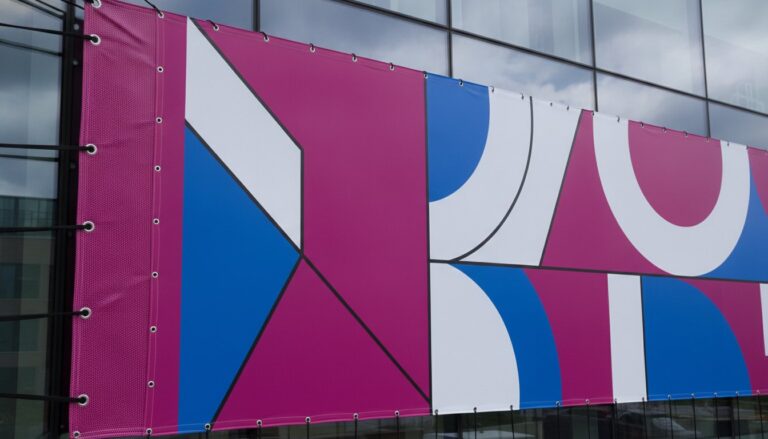
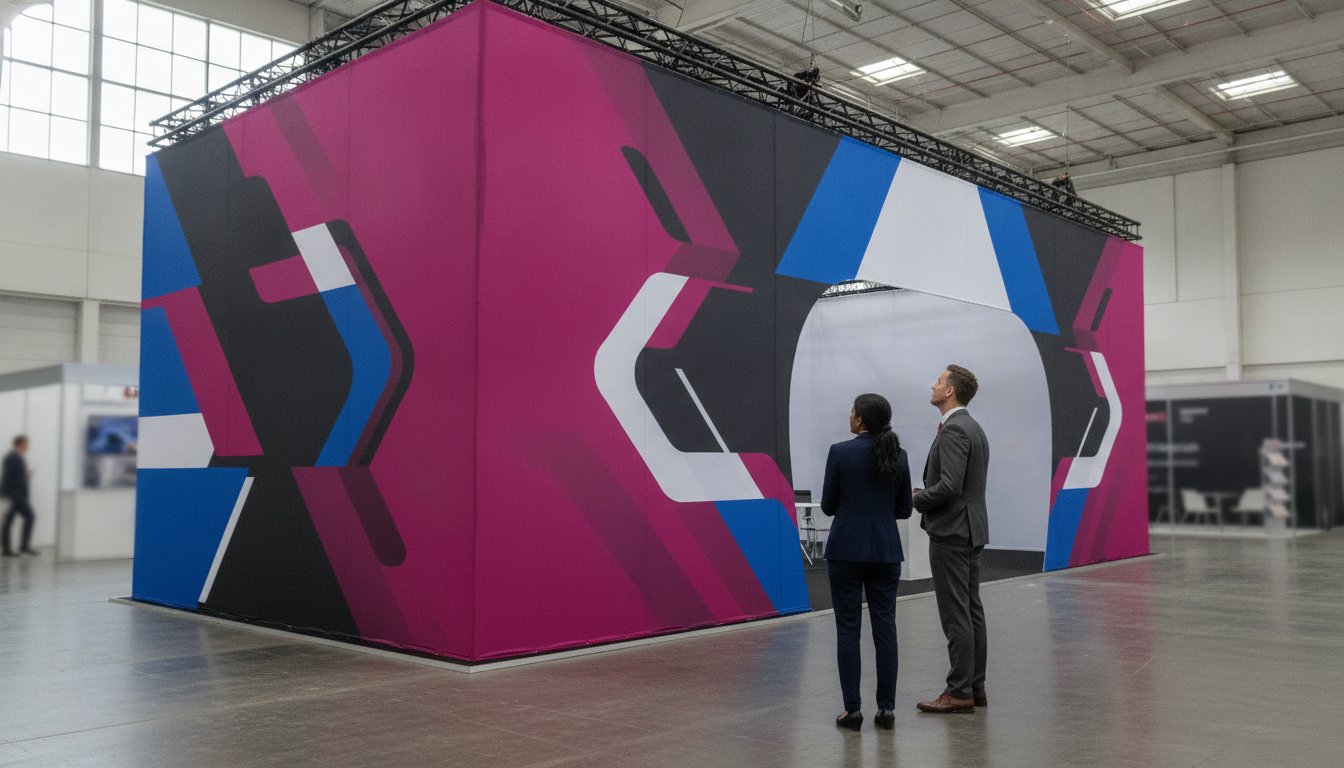
If your goal is to obscure the metal structure entirely, overlay panels or seamless fabric are the superior shell scheme upgrade ideas. Overlay panels typically use hook and loop fasteners to sit across the uprights, hiding the majority of the framework. This creates a more continuous visual flow than infill panels, though small gaps may still be visible at the joins. For those seeking the ultimate premium finish, Silicone Edge Graphics (SEG) have become the industry gold standard. SEG uses a tensioned fabric that slots into a hidden profile, creating a single, unbroken graphic wall that looks like a permanent, custom-built installation.
Comparison of setup times is a vital factor for your event team. Infill panels are rapid and require minimal technical skill. Seamless fabric systems take longer to assemble because the hidden frame must be precisely aligned before the fabric is tensioned. However, the visual result is incomparable, offering a matte, crease-free surface that photographs beautifully under hall lights. To ensure your graphics fit perfectly and deliver that high-impact finish, you can browse our professional Silicone Edge Graphics and rigid media options.
Ultimately, your choice depends on how much of the “shell” you want to disappear. Infill panels acknowledge the structure; seamless cladding replaces it. Both methods serve a purpose, but for high-traffic trade shows where first impressions are everything, hiding the framework is often the most effective way to elevate your brand authority.
Material Matters: Comparing Rigid Panels and Fabric SEG
Once you have decided on a cladding method, your next choice involves the media itself. This decision impacts everything from your carbon footprint to the vehicle you need for transport. In the UK exhibition industry, the choice usually comes down to two primary materials: rigid Foamex panels or the increasingly popular Silicone Edge Graphics (SEG).
The Benefits of Rigid Foamex Cladding
Foamex remains the industry standard for a reason. It’s a lightweight yet incredibly durable PVC foam that provides a smooth, flat surface for high-resolution printing. These panels are remarkably resistant to the inevitable knocks and scratches that occur in busy exhibition centres. Because the material is non-porous, the print quality is exceptional, delivering vibrant colours and razor-sharp text that commands attention from across the aisle.
Storing rigid media requires a bit more care. You must keep panels flat and protected between shows to prevent warping or corner damage. Whilst they are easy to wipe clean, their physical footprint is large. If you are looking for shell scheme upgrade ideas that offer longevity and a classic architectural feel, rigid panels are a dependable investment for your annual event calendar.
The SEG Revolution for Shell Schemes
Silicone Edge Graphics represent a significant shift in how exhibitors approach stand aesthetics. This system uses high-quality fabric banners with thin silicone strips sewn directly into the edges. These strips slot into a perimeter extrusion, tensioning the fabric to eliminate every single crease. The result is a flawless, matte finish that completely removes the risk of glare from overhead hall lighting, making it the preferred choice for stands that will be photographed or filmed.
The logistical advantages are undeniable. Whilst rigid panels often require a van and multiple handlers, a full set of fabric cladding can often fit into a single carry bag. This makes SEG one of the most efficient shell scheme upgrade ideas for national exhibitors who want to reduce transport costs and complexity. We utilise dye-sublimation printing for our fabric range, which bonds the ink directly into the fibres. This ensures the graphics remain vibrant and can even be washed if they become soiled during transit.
Sustainability is also a major factor. Fabric graphics are generally more eco-conscious than traditional PVC, as they are lighter to ship and take up far less space in storage. For modern brands looking to balance high-impact visuals with environmental responsibility, the SEG revolution offers a compelling path forward.
Technical Considerations: Measuring, Lighting, and Logistics
Precision is the hallmark of a successful exhibition stand. While selecting materials is a creative process, the execution is purely technical. You must understand the underlying hardware before committing to specific shell scheme upgrade ideas. Most UK venues utilise Octanorm systems, but brands like Sodem or Modul are also prevalent. This matters because the brand of the system dictates the specific clip or extrusion type required to secure your cladding. Using an Octanorm-specific clip on a Sodem frame will result in a poor fit or, worse, graphics that fail mid-event.
Health and safety compliance is a non-negotiable aspect of UK exhibiting. All cladding materials must meet strict fire rating standards, typically B1 or equivalent, to satisfy venue organisers. We manufacture all our graphics to meet these professional requirements, providing you with the necessary peace of mind during the risk assessment process. Beyond safety, you must consider the “measurement trap.” There is a significant difference between the visible panel size and the total height including the top fascia or plinth. Overlooking this detail often leads to cladding that overhangs the stand or leaves unsightly gaps at the floor level.
The Essential Measuring Checklist
Success starts with an accurate site survey or a detailed brief from the event organiser. Don’t assume standard dimensions; always verify the exact manufacturer of the shell scheme provided. You should check for internal obstructions such as support pillars, electrical sockets, or fire extinguishers that might interfere with a flat cladding surface. Measuring the total height from the floor to the top of the aluminium upright is vital for seamless fabric solutions. If you are ready to implement these technical upgrades, you can order your bespoke shell scheme graphics today.
Illumination and Impact
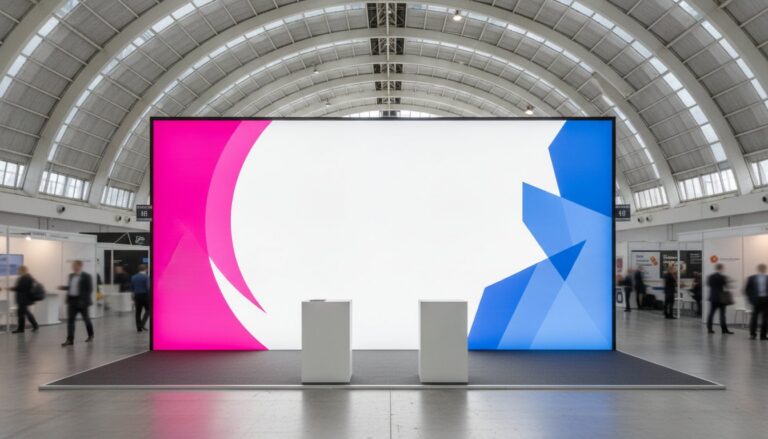
Lighting is the final touch that transforms a good stand into a great one. You can incorporate backlit fabric light boxes into your cladding to create a “hero wall” that glows, drawing visitors from across the hall. For rigid panels, traditional arm lights remain a reliable choice for highlighting key messaging. One of the primary benefits of professional cladding is the ability to hide messy cables and power packs behind the graphics. This ensures a clean finish that looks professional from every angle. Choosing non-reflective fabric or matte-laminated Foamex is also essential, as it prevents harsh glare when your stand is being photographed for social media or marketing materials.
Custom Cladding Solutions from Colour Graphics
Executing a high-impact stand requires a manufacturing partner who understands the technical nuances of large-format production. At Colour Graphics, we specialise in turning complex shell scheme upgrade ideas into reality through precision engineering and high-performance materials. Based in the UK, we’ve been manufacturing in-house since 1980. This allows us to maintain total control over quality and offer the fast turnarounds required for tight event deadlines.
Our range of SEG extrusions provides the structural foundation for your transformation. We offer bespoke frames for both wall-mounted and freestanding displays, ensuring your graphics sit perfectly tensioned every time. We utilise the latest digital printing technology to achieve colour-accurate branding that remains consistent across all your media. Whilst we don’t offer on-site installation, our team organises every component of your kit for a straightforward DIY setup. We provide the technical guidance and precision-cut materials needed for you to achieve a professional result independently.
Why Choose Colour Graphics for Your Next Show?
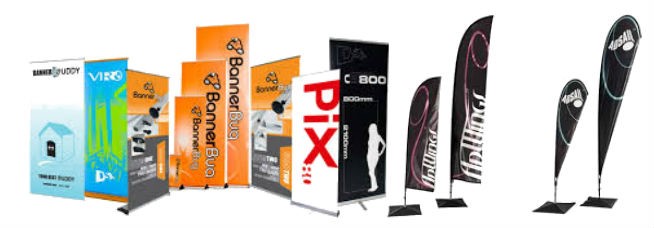
We provide a comprehensive ecosystem of display solutions. Our extensive inventory includes a wide range of banner stands and rigid media to complement your primary cladding. With decades of experience serving the UK’s biggest exhibition venues, we understand the logistical challenges exhibitors face. Our commitment to precision ensures that every panel is cut to the exact millimetre, eliminating the risk of misalignment on the day of the show. You receive a durable, reusable asset that maintains its integrity through repeated use.
Ordering Your Cladding Kit
Success in multi-panel displays depends on meticulous artwork alignment. When you submit your designs, our technicians review the files to ensure that images and text flow seamlessly across the joins. This attention to detail is vital for maintaining the bespoke stand illusion. We offer flexible national delivery options, getting your graphics directly to your office or the venue loading bay. This streamlined process ensures you have everything you need, exactly when you need it. Ready to elevate your presence? Transform your stand with professional shell scheme cladding from Colour Graphics and command the attention your brand deserves.
Elevate Your Brand Presence at Your Next Exhibition
Transforming a basic booth into a high-impact destination is a strategic move that pays dividends in lead quality and brand authority. By selecting the right cladding method, whether it’s durable rigid Foamex or premium Silicone Edge Graphics, you effectively hide the utilitarian aluminium frame and create a seamless, professional environment. These shell scheme upgrade ideas allow your brand to compete with larger, custom-built stands whilst maintaining a manageable budget and simplified logistics.
As UK-based large format printing specialists since 1980, we manufacture all our SEG extrusions and fabric displays in-house. This ensures the precision and reliability that marketing professionals across the country have trusted for decades. We provide the expert guidance and high-performance materials you need to achieve event excellence with a straightforward DIY setup. Your next show is an opportunity to stand out; make sure your stand reflects the quality of your business.
Ready to transform your exhibition space? Browse our Shell Scheme Cladding and SEG Graphics today and start planning your most successful event yet.
Frequently Asked Questions
What is the most popular material for shell scheme cladding in the UK?
Foamex is a dependable industry standard for rigid panels, but Silicone Edge Graphics (SEG) is now the leading choice for a premium look. SEG uses tensioned fabric to create a seamless wall, hiding the framework entirely. For exhibitors seeking versatile shell scheme upgrade ideas, fabric offers a matte finish that avoids the glare often found on PVC panels under harsh hall lighting. Both materials provide excellent colour reproduction for high-impact branding.
Can I install shell scheme cladding myself or do I need a professional?
You can absolutely install these cladding systems yourself without professional help. We design our kits specifically for straightforward DIY assembly, providing all the necessary clips or extrusions. Whilst we don’t offer on-site installation services, we ensure every component is precision-cut for a perfect fit. Most exhibitors find that two people can clad a standard stand in under an hour, making it a highly efficient solution for teams managing their own event logistics.
Will cladding graphics fit any shell scheme, such as Octanorm?
Our graphics are compatible with all major shell scheme brands, including Octanorm, Sodem, and Modul. It’s vital to identify the specific system used by your event organiser, as this determines the type of clips or profile required. Octanorm is the most common system in the UK, and we maintain a deep inventory of compatible hardware. Precision measuring is the key to ensuring your cladding sits flush without overhanging the stand perimeter during the event.
How much does it cost to clad a standard 3m x 3m shell scheme?
The cost of cladding a stand varies depending on your chosen material and whether you opt for an infill, overlay, or seamless finish. Rigid Foamex panels are generally the most budget-friendly entry point for exhibitors. In contrast, seamless SEG fabric systems represent a higher initial investment because of the specialised aluminium frames required to tension the media. When calculating your budget, consider the long-term value of reusability and the significant savings in transport costs.
Can I reuse my shell scheme graphics at different exhibitions?
Yes, our cladding solutions are designed for repeated use across multiple events. Rigid Foamex panels are highly durable but must be stored flat to prevent warping or corner damage. Fabric SEG graphics are even more resilient; they can be folded without permanent creasing and are easily refreshed if they become soiled. This durability makes them one of the most sustainable shell scheme upgrade ideas, as you won’t need to replace your graphics for every show.
Is fabric cladding better than Foamex for international travel?
Fabric cladding is significantly better for international travel and logistics than rigid media. A full set of fabric graphics can often fit into a single carry bag or small box, whereas rigid Foamex panels require large crates and a van. This drastically reduces shipping costs and simplifies the move-in process at the venue. If your event calendar includes shows across the UK or abroad, the portability of fabric SEG provides a major advantage.
What fire safety ratings are required for exhibition cladding?
UK exhibition venues require all stand materials to meet strict fire safety standards, typically a B1 rating or Class 1/0 equivalent. These regulations, outlined in the AEV e-Guide, ensure that graphics are flame-retardant and safe for use in public spaces. We manufacture all our fabric and rigid media to meet these professional safety requirements. You’ll receive materials that are fully compliant, giving you peace of mind during the venue’s health and safety inspections.
How do I hide the aluminium poles on my shell scheme stand?
To completely hide the aluminium poles, you should choose either overlay panels or a seamless SEG system. Overlay panels sit on the face of the uprights using hook and loop fasteners, obscuring the majority of the metal. For a truly architectural finish, a seamless fabric wall uses a hidden frame that sits in front of the poles. This creates a single, uninterrupted graphic surface that transforms a standard shell scheme into a premium, bespoke environment.