Professional Business Signage Printing: The 2026 UK Guide to High-Impact Displays
Your signage is the most hardworking member of your sales team, but it’s also the one most likely to let you down if you choose the wrong substrate. You understand that a first impression is everything; yet, the technical specifications involved in business signage printing often feel like a complex minefield. It’s natural to worry whether your brand colours will look washed out on a large-format print or if a Foamex display will warp after its first week in the unpredictable British rain.
This 2026 guide eliminates that uncertainty by mastering the technical science behind high-impact displays. We provide the clarity you need to choose between materials like Dibond and PVC with total confidence. You’ll learn how to navigate the latest UK planning regulations and streamline your ordering process to ensure your brand commands attention with crisp, professional-grade results that are built to last for years.
Key Takeaways
- Discover how high-resolution print quality establishes immediate brand authority and builds a psychological foundation of trust with your target audience.
- Navigate the technical complexities of business signage printing by mastering the functional differences between rigid media and high-performance fabric displays.
- Ensure long-term durability in the UK climate by selecting substrates and laminations specifically engineered for weather resistance and UV protection.
- Optimise your production workflow by understanding the critical role of vector graphics and technical specifications in achieving crisp, large-format results.
- Leverage the reliability of a specialist UK-based manufacturer to secure precision craftsmanship, reduced lead times, and a more sustainable supply chain.
The Strategic Role of Professional Business Signage Printing
High-impact signage isn’t just a label; it’s a declaration of quality. Professional business signage printing transforms a physical space into a brand asset that commands respect from the moment a client approaches your premises. The role and function of signage extends far beyond simple identification. It acts as a primary tool for persuasion, trust-building, and authority. When you invest in high-resolution, professional-grade displays, you’re sending a psychological signal to your customers that your business prioritises precision and reliability.
Poorly executed prints with visible pixels or washed-out colours do more than just look cheap. They actively damage consumer trust. Mastering the nuances of business signage printing requires a clear distinction between permanent architectural branding and temporary promotional tools. Whilst temporary items like PVC Banners or Mesh Banners serve short-term campaigns, your core brand displays demand the specialised large format equipment that only a professional manufacturer can provide. This machinery ensures absolute colour fidelity and crispness that smaller, office-grade printers simply cannot replicate.
Brand Consistency Across National Locations
Maintaining a unified brand identity is a significant logistical challenge, especially when your footprint expands across the UK. Professional manufacturing solves this by utilising strict Pantone colour matching protocols. Whether your logo appears on a high-flying Promotional Flag or a rigid Correx® board, the hue must be identical. Brand equity is built through repetition and reliability. Using a single, expert manufacturer ensures that different substrates, from indoor Wall Graphics to outdoor Dibond panels, maintain a cohesive aesthetic that reinforces your professional standing at every location.
First Impressions and the Return on Physical Assets
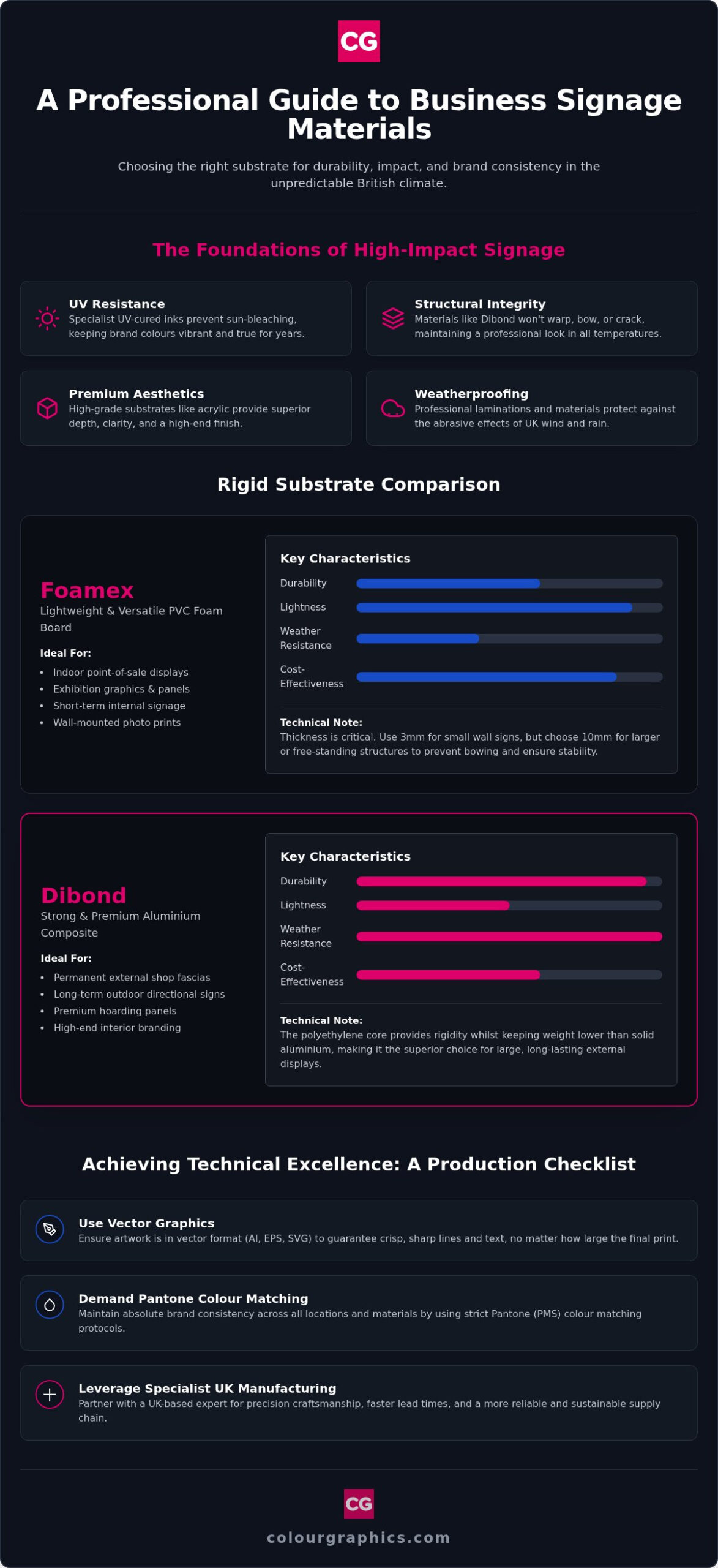
Think of your signage as a silent salesperson working 24/7. Unlike digital ads that disappear with a click, physical signage is a tangible asset with a long-term return. The difference between a high-performance result and a budget alternative often lies in the ink technology. Professional UV-cured inks offer superior resistance to fading and weather damage compared to standard solvent alternatives. Investing in premium materials ensures your displays remain vibrant and structural for years, not just months. Consider these key benefits of professional-grade materials:
- UV Resistance: Specialist inks prevent sun-bleaching, keeping brand colours vibrant.
- Structural Integrity: Materials like Aluminium Composite (Dibond) won’t warp or crack in the heat.
- Premium Aesthetics: Acrylic Printing provides a depth and clarity that suggests high-end craftsmanship.
- Weatherproofing: Professional finishes protect against the abrasive effects of wind and rain.
This focus on durability reduces your total lifecycle cost and keeps your brand looking sharp in the face of the unpredictable British climate. With the global printed signage market projected to grow toward £12 billion by 2034, businesses that invest in durable, high-quality physical assets now will be best positioned to maintain their professional edge.
Navigating Signage Materials: From Rigid Media to Premium Fabrics
Selecting the right substrate is where technical expertise meets creative vision. In the field of business signage printing, the choice between rigid media and flexible fabrics defines not just the look, but the lifespan and logistical ease of your display. Whilst rigid boards remain the backbone of external branding, there is a distinct industry shift toward premium fabric solutions for high-end retail and exhibitions. This transition is driven by the demand for more sustainable, lightweight, and high-impact visual systems that offer a level of sophistication traditional PVC cannot match.
Choosing the correct thickness for rigid boards is a critical technical decision. A 3mm Foamex board might suffice for a small wall sign, but a 10mm version is necessary for free-standing structures to prevent bowing. Similarly, the role of proprietary extrusions in high-end signage systems cannot be overstated. These custom-engineered frames provide the structural tension required for large-scale fabric displays, ensuring the surface remains perfectly flat and professional regardless of the environment’s temperature or humidity.
Rigid Substrates: Foamex, Dibond, and Correx
Rigid substrates are categorised by their durability and weight. Foamex Printing is the industry’s go-to for indoor point-of-sale displays; it’s lightweight yet dense enough to hold a crisp finish. For permanent external installations, Dibond Printing is the gold standard. This aluminium composite material resists thermal expansion, ensuring your signs won’t warp in the sun or crack in freezing temperatures. For short-term site boards or event wayfinding, Correx® Printing provides a cost-effective, fluted plastic solution that is fully recyclable. Adhering to the standards set by the British Sign & Graphics Association ensures that these materials are processed using industrial-grade techniques for maximum performance.
The Rise of Silicone Edge Graphics (SEG)
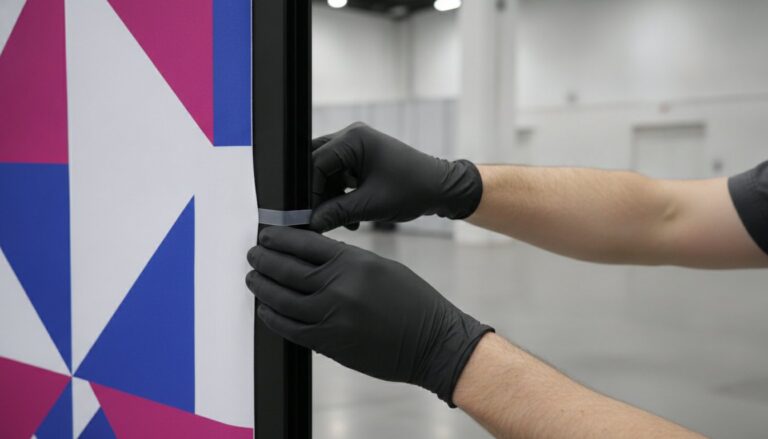
The most significant innovation in recent years is the rise of Silicone Edge Graphics (SEG). This system uses a tension fabric graphic with a silicone gasket sewn into the edge, which then slots into a proprietary aluminium extrusion. It creates a drum-tight, borderless finish that looks incredibly high-end. Fabric light boxes take this a step further, using LED illumination to make brand colours pop with unparalleled vibrancy. Because the fabric is easy to fold and ship, it significantly reduces transport costs and carbon footprint compared to rigid boards. If you are looking for a premium, illuminated finish, our Silicone Edge Graphics offer a seamless solution that allows your team to swap displays in seconds without technical expertise, making it a revolutionary choice for modern business signage printing.
Outdoor Durability vs Indoor Aesthetics: Choosing Your Substrate
The British weather is the ultimate stress test for any physical branding. Rain, frost, and the surprisingly abrasive UV rays of a UK summer can degrade inferior prints within months, leading to a faded, unprofessional image. Choosing the right substrate for business signage printing isn’t just about aesthetics; it’s about structural survival. Whilst indoor displays focus on tactile quality and glare reduction, outdoor signage must prioritise weatherproofing and wind-loading factors to ensure your investment lasts for years.
Weatherproofing Your National Brand Presence
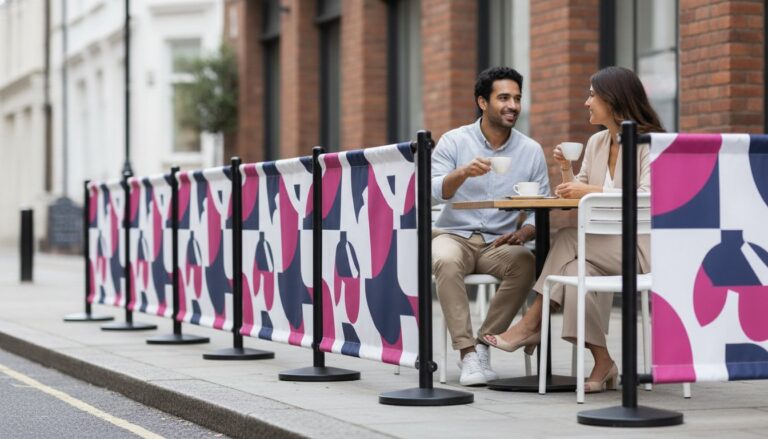
UV-stable inks are the non-negotiable standard for any external display. Without them, vibrant brand colours will wash out under direct sunlight. For short-to-medium term campaigns, Waterproof Posters and PVC Banners offer a resilient, flexible solution that handles moisture with ease. However, when your signage is positioned in exposed areas, you must consider the “wind-loading” factor. This is where Mesh Banners become essential; their perforated weave allows wind to pass through the material, preventing the “sail effect” that can rip standard vinyl from its fixings.
For permanent architectural branding, Dibond Printing remains the champion of structural integrity. These aluminium composite panels don’t warp or expand significantly in heat, making them ideal for large-scale fascia signs. It’s also critical to ensure that any permanent outdoor installation complies with UK signage regulations, specifically regarding safety and planning consent for advertisements. Adding a protective lamination to these rigid boards provides an extra layer of defence against both the elements and accidental abrasion.
Indoor Sophistication: Fabric and Acrylic
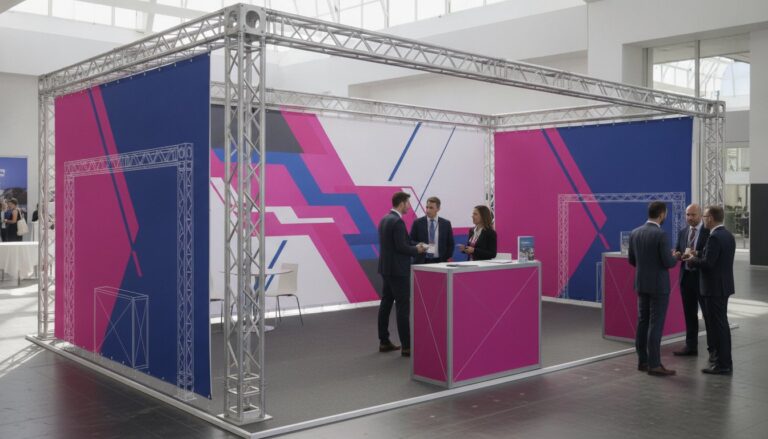
Internal environments present a different set of challenges, primarily related to lighting and professional perception. High-gloss finishes often struggle under harsh office strip lights, creating distracting reflections. Fabric Displays solve this problem by providing a soft, matte finish that absorbs light, ensuring your graphics are legible from every angle. These stretch fabric systems create a seamless, premium finish that is perfect for exhibition backdrops or retail feature walls.
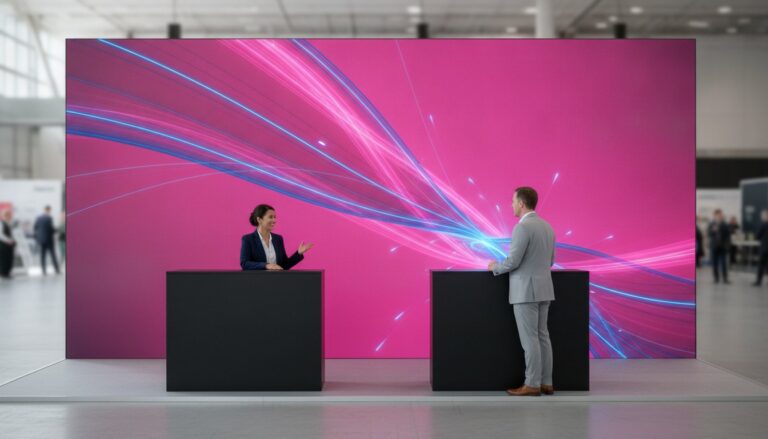
If you want to project an image of high-end craftsmanship in a reception or boardroom, Acrylic Printing is the superior choice. It offers a sophisticated, glass-like depth that suggests permanence and prestige. For retail spaces looking to capture attention in low-light areas, Backlit Posters and Lightboxes are transformative. They use internal illumination to make graphics pop with a vibrancy that standard print cannot match, guiding the customer’s eye exactly where you want it to go.
Technical Excellence: Preparing Business Signage for Production
Precision in the design phase is what separates a mediocre sign from a masterpiece of brand authority. Whilst online templates might promise speed, they often fall short when scaled to large-format dimensions, leading to pixelation and generic results. Professional business signage printing requires a technical partnership where your creative vision is backed by manufacturing expertise. At Colour Graphics, we’ve spent over 40 years refining the production process to ensure that every file we receive translates perfectly onto the final substrate.
The most critical element of large-format success is the use of vector graphics. Unlike raster images, which lose quality as they grow, vectors allow your logo to remain razor-sharp whether it’s on a business card or a 10-metre Mesh Banner. When preparing files for rigid media like Foamex or Dibond, you must also account for “bleed” and “quiet zones”. We typically require a 3mm to 5mm bleed to ensure that the print extends to the very edge of the board after cutting. Keeping essential text and logos within a “quiet zone” away from the trim line prevents any critical information from being lost during the CNC routing process.
The Pro-Print Checklist for Signage
To guarantee a seamless transition from screen to physical display, follow this essential technical checklist before submitting your artwork:
- Outline Your Fonts: Always convert text to paths or outlines. This prevents font substitution errors if our production machines don’t have your specific typeface.
- CMYK Colour Profiles: Digital screens use RGB, but professional printers use CMYK. Setting your document to CMYK from the start ensures the final colours match your expectations.
- Resolution Requirements: Whilst 300 DPI is the standard for A0 Posters, larger displays seen from a distance, such as billboards or building wraps, can often perform perfectly at 72 to 150 DPI at full size.
Finishing Touches That Define Quality
The manufacturing process doesn’t end when the ink dries. Finishing options are what provide the durability and professional polish your brand deserves. Lamination is a prime example; a matt laminate reduces glare in brightly lit retail spaces, whilst a gloss finish can make colours appear deeper and more vibrant. For PVC Banners, high-quality hemming and eyeleting are essential for secure mounting, preventing the material from tearing under tension.
For brands looking for something truly unique, custom shape cutting via CNC routing allows us to move beyond standard rectangles. We can cut Foamex Printing or Dibond Printing into bespoke silhouettes that mirror your logo or product shape, creating a high-impact 3D effect. If you’re ready to bring your technical designs to life with a specialist manufacturer, you can upload your artwork today and let our team handle the precision production.
Why Professional UK Manufacturing is Your Competitive Advantage
Choosing a manufacturing partner is a strategic decision that impacts your brand’s longevity and environmental footprint. Since 1980, Colour Graphics has operated as a family-owned UK business, providing the technical mastery required for complex business signage printing projects. Unlike mass-market resellers who outsource production to various third parties, we maintain total control over our UK-based facility. This direct oversight ensures that the precision we promise is the precision we deliver, giving you total peace of mind throughout the production lifecycle. Understanding what separates leading large format printing companies from generic resellers is essential when evaluating which partner can truly deliver consistent, high-impact results for your brand.
From SEG to Supersize: A Comprehensive Portfolio
Our facility is equipped to handle the full spectrum of commercial requirements. We leverage proprietary SEG extrusions to create bespoke Silicone Edge Graphics that provide a flawless, high-end finish for premium retail environments. Our capabilities aren’t limited by scale. Whether you need a single batch of A0 Posters for a local promotion or massive Mesh Banners for building wraps, we have the industrial capacity to deliver. Businesses amongst all sectors, from construction to high-street retail, rely on our 40 years of expertise to ensure their brand remains vibrant and structural in any setting.
Ready to Elevate Your Brand Presence?
Mastering the complexities of business signage printing involves a journey from selecting the right weather-resistant substrate to ensuring your vector files are production-ready. We’ve explored how materials like Foamex and Dibond serve different functional needs and how technical precision in the design phase prevents costly errors. Now is the time to translate that knowledge into high-impact physical displays that command attention and drive results. Explore our full range of business signage at Colour Graphics to find the perfect solution for your next project.
Command Attention with Precision Signage
Mastering the technical landscape of business signage printing is the definitive way to ensure your brand remains vibrant and structural in an increasingly competitive market. We’ve explored how selecting the right substrate, from weather-hardy Dibond to premium Silicone Edge Graphics, provides the foundation for professional-grade results. By prioritising vector-based design and technical accuracy, you eliminate the risk of low-resolution displays and ensure every touchpoint reinforces your brand authority.
Colour Graphics has been a family-owned industry leader since 1980. Our state-of-the-art UK manufacturing facility is specifically equipped to handle high-capacity requirements with meticulous precision. Whether you need illuminated fabric displays or durable architectural boards, we act as your proactive innovation partner to deliver high-performance results that last for years. It’s time to move beyond generic templates and invest in the expert craftsmanship your business deserves.
Order your custom business signage from the UK experts at Colour Graphics and let us help you transform your physical space into a high-impact brand asset today.
Frequently Asked Questions
What is the best material for long-term outdoor business signage?
Aluminium composite, commonly known as Dibond, is the gold standard for long-term outdoor business signage printing. Its structural core prevents the panel from warping or expanding significantly during the UK’s fluctuating temperatures. When paired with UV-stable inks and a protective laminate, it provides a permanent branding solution that remains flat and vibrant for several years in exposed environments.
How do I know if my artwork is high enough resolution for large format printing?
You should verify your image resolution at the final physical print size using professional design software. Whilst 300 DPI is the benchmark for close-up viewing, large-format displays like Mesh Banners can often utilise 100 to 150 DPI due to the increased viewing distance. Using vector graphics for logos and text is the most reliable way to guarantee a crisp, pixel-free result at any scale.
What is the difference between Foamex and Dibond?
Foamex is a lightweight, compressed PVC board primarily used for indoor displays and short-term external signage. In contrast, Dibond consists of a polyethylene core sandwiched between two aluminium sheets, making it much stronger and more resistant to the elements. Whilst Foamex is excellent for point-of-sale displays, Dibond is the necessary choice for permanent building fascias and high-wind environments.
Can I use fabric displays for outdoor events?
Certain fabric solutions are specifically engineered for outdoor use, such as Promotional Flags and Mesh Banners. These materials allow wind to pass through the weave, reducing the risk of damage during inclement weather. However, standard Silicone Edge Graphics and indoor fabric displays should be kept undercover; their frames and fabrics aren’t designed to withstand prolonged exposure to heavy rain or high-velocity gusts.
How long does professional business signage typically last?
The lifespan of your signage depends heavily on the chosen substrate and its exposure to the elements. Permanent Dibond installations often maintain their integrity for five years or more when professionally laminated. Temporary solutions like Correx® or standard PVC Banners are typically rated for six to twelve months of external use before the material begins to show signs of environmental wear.
Do you offer custom shapes for rigid signs?
We utilise advanced CNC routing technology to provide custom shape cutting for all our rigid media. This process allows us to move beyond standard rectangles and create bespoke silhouettes that follow the exact contours of your brand logo or product. Custom-shaped Foamex or Acrylic Printing adds a sophisticated, three-dimensional quality to your office branding and helps your business signage printing stand out from generic competitors.
What are Silicone Edge Graphics (SEG) and how are they used?
Silicone Edge Graphics (SEG) are high-resolution fabric prints with a thin silicone strip sewn directly into the edges. This gasket slots into a proprietary aluminium extrusion to create a drum-tight, borderless finish. They are widely used in retail and exhibitions because they are lightweight, easy to ship, and allow for rapid graphic updates without technical training or specialised tools.
How does UV lamination protect my outdoor signs?
UV lamination acts as a protective shield that filters out harmful ultraviolet rays, which would otherwise cause your print to fade over time. Beyond sun protection, it adds a layer of physical resistance against scratches, moisture, and abrasive dirt. You can choose between matt lamination to reduce glare in bright areas or gloss lamination to enhance the depth and vibrancy of your brand colours.