Exhibition Stand Lighting Guide: 2026 Marketing Checklist
Your exhibition stand is a high-performance marketing tool, but without the right illumination, it’s just expensive wallpaper. If your presence feels flat or dim compared to the vibrant displays across the aisle, you’re essentially invisible to your target audience. This exhibition stand lighting guide provides the technical precision you need to transform your space into a command centre that pulls visitors in. We understand the pressure of managing high venue electricity surcharges and the technical difficulty of perfectly illuminating fabric graphics without creating unsightly hot spots or shadows.
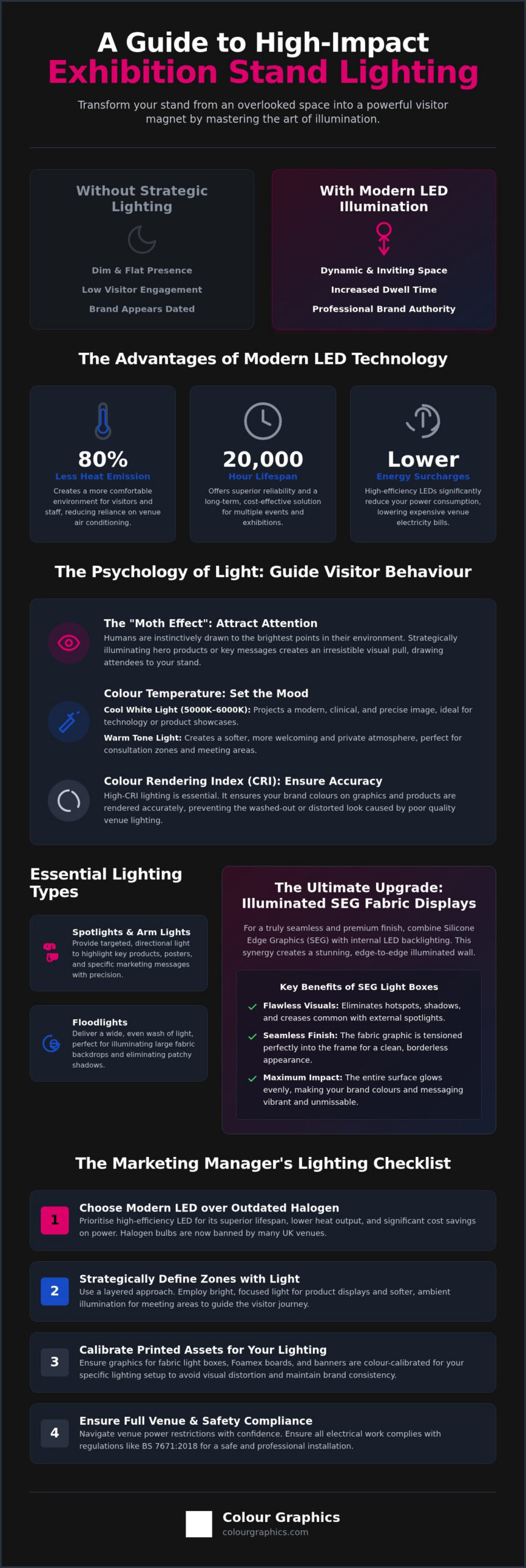
You deserve the peace of mind that comes from a stand that’s both visually stunning and fully compliant with the latest safety standards. We’ll show you how to master the art of illumination, focusing on modern LED solutions that reduce heat emissions by 80% and offer a lifespan of 20,000 hours. We’ll walk you through the essential 2026 marketing checklist, covering everything from integrated SEG light boxes to the mandatory BS 7671:2018 Amendment 4 regulations. By the end of this article, you’ll have a clear strategy to ensure your brand shines brighter than the competition while keeping operational costs under control.
Key Takeaways
- Understand how colour temperature and brightness influence visitor behaviour and dwell time to maximise engagement on your stand.
- Learn why internal LED illumination combined with Silicone Edge Graphics (SEG) provides a superior, seamless finish compared to traditional spotlights.
- Follow this comprehensive exhibition stand lighting guide to navigate complex venue power restrictions and technical requirements with professional confidence.
- Discover how modern LED technology reduces heat output by 80%, creating a more comfortable environment whilst lowering event electricity surcharges.
- Ensure your printed assets, from fabric light boxes to Foamex boards, are perfectly calibrated for your specific lighting setup to avoid visual distortions.
Why Lighting is the Most Critical Element of Your Exhibition Stand Design
The psychology of brightness is undeniable. Humans possess an innate behaviour often called the “moth effect,” where they naturally gravitate towards the brightest focal points in a room. By strategically increasing lux levels on your hero products, you create an irresistible visual pull that cuts through the surrounding hall noise. However, impact isn’t just about raw power. Colour temperature plays a decisive role in dwell time. Cool, crisp white light projects an image of modern efficiency and precision. Conversely, warmer tones can soften a consultation area, making it feel more private and welcoming for high-value conversations. Mastering this balance is a foundational part of effective Exhibit design.
Creating Brand Authority Through Illumination
Directing the Visitor Journey
Strategic lighting acts as a silent navigator for your guests. Use directional arm lights or spotlights to carve out specific zones within your footprint. You might use intense, focused beams to highlight a new product launch, whilst using diffused LED strips to define the perimeter. This approach prevents the “visual noise” of the hall from overwhelming your message. Most importantly, professional lighting prevents the awkward shadows that often obscure text on graphics. Whether you’re using Foamex board printing or fabric displays, ensuring the light source is correctly positioned is vital for legibility and brand impact.
The industry has moved decisively away from traditional halogen bulbs. They’re inefficient, produce excessive heat, and are now largely banned in major UK venues. High-efficiency LED is the 2026 standard. It offers the technical precision needed for modern marketing whilst significantly reducing the energy surcharges that can inflate your exhibition budget. By choosing the right LED setup, you’re opting for a solution that’s both environmentally conscious and commercially smart.
Essential Types of Exhibition Lighting: From Spotlights to Backlighting
Selecting the right hardware is where your strategic vision meets technical reality. A comprehensive exhibition stand lighting guide must categorise fixtures by their function: accent, task, or ambient. Arm lights and spotlights remain the workhorses of the industry, providing targeted illumination for your posters and banners. For larger surfaces, floodlights are indispensable. They ensure that expansive fabric backdrops receive an even wash of light, eliminating the patchy appearance that can undermine a professional display.
The choice between uplighting and downlighting creates fundamentally different atmospheres. Downlighting is functional and welcoming, perfect for general stand areas. Uplighting, by contrast, adds a layer of drama and architectural depth, often used to make a stand feel taller and more imposing. These Principles of Effective Illumination help you layer your light sources to create a multi-dimensional space that captures the eye from across the hall.
Spotlights and Clamp Lights
Precision is key when highlighting high-value products or specific marketing messages. Cool white LED bulbs (around 5000K to 6000K) project a clinical, modern energy, whilst warm white (2700K to 3000K) feels more inviting. When illuminating rigid media like Dibond printing, positioning is critical. Angle your arm lights to ensure the reflection bounces away from the visitor’s eye level to prevent distracting glare. Opting for fixtures with adjustable heads allows your team to make those vital last-minute tweaks once the stand is fully assembled.
Ambient and Decorative Lighting
If your stand uses high-gloss materials, ensure your lighting is paired with quality foamex board printing to maintain a professional, glare-free finish.
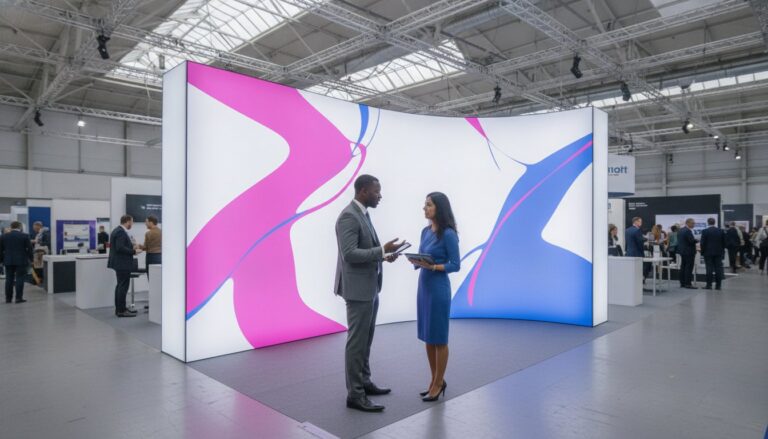
Silicone Edge Graphics (SEG) represent the pinnacle of modern display technology. Whilst traditional front-lit banners served their purpose for decades, the integration of internal LED illumination has shifted the benchmark for brand impact. This exhibition stand lighting guide identifies the fabric light box as the most effective tool for creating a high-end, architectural feel without the bulk of traditional construction. The synergy between precision-engineered extrusions and high-tension fabric creates a seamless, glow-from-within effect that is impossible to replicate with external spotlights.
The mechanics are straightforward yet require meticulous execution. A series of high-output LED modules are mounted within a custom aluminium frame. These LEDs are positioned to project light through a specialised light-diffusing textile. The result is a perfectly even wash of light across the entire graphic surface. One of the primary pains for exhibitors is the appearance of hotspots, those distracting bright points where individual LEDs are visible through the fabric. Premium extrusions, designed specifically for light diffusion, eliminate this issue. They ensure the light is scattered uniformly, providing a smooth, professional finish that enhances your marketing message.
Backlit graphics offer a level of colour saturation and vibrancy that front-lit alternatives simply cannot match. Because the light travels through the ink, the colours appear deeper and more luminous, making your stand a beacon in a crowded hall. Beyond aesthetics, internal lighting is a practical space-saver. You don’t need protruding arm lights that can be knocked by visitors or create shadows on your own graphics. It’s a cleaner, more integrated look that reinforces your brand’s professional polish.
Choosing the Right Fabric for Backlighting
The Marketing Manager’s Exhibition Stand Lighting Checklist
Precision planning prevents on-site panic. This exhibition stand lighting guide provides the structured framework you need to ensure your visual impact isn’t undermined by technical oversights. Reviewing the venue’s technical handbook is your first priority. Major UK venues like the NEC or ExCeL have strict regulations regarding power draw and safety. Ignoring these details can lead to unexpected surcharges or, worse, a stand that remains dark on opening morning.
Step 1: Venue and Power Audit
Confirm your total wattage early to avoid tripping circuits. Venue electricity is expensive, and surcharges for 2026 remain a significant budget consideration. Booking your electrical supply during the “early bird” window can save substantial costs. Map out every power socket location on your floor plan. This allows you to organise cable runs behind your displays, maintaining a clean and professional appearance. If you’re using high-output LEDs, you’ll likely need fewer sockets than traditional setups, but you must still account for the location of drivers and transformers.
Step 2: Equipment and Asset Check
Once the build is complete, check for “bounce” or reflections. Harsh glare can make text hard to read and ruins visitor photography. Adjust the angle of your spotlights after your neighbours have finished their builds. Their lighting can spill onto your stand, potentially washing out your carefully planned colour palette. Finally, confirm that your lighting doesn’t interfere with on-stand digital screens. High-intensity lights positioned too close to monitors can cause “ghosting” or make content difficult to see.
Health and safety compliance is non-negotiable. All equipment must undergo PAT testing. As of April 15, 2026, all UK event installations must comply with Amendment 4 to the BS 7671:2018 wiring regulations. This includes updated standards for cable management and battery storage if you’re using cordless units. Test every single light before the hall doors open. A quick verification ensures your brand projects the reliable, high-performance image your audience expects.
Ready to elevate your next event? Explore our range of professional exhibition displays to find the perfect illuminated solution for your brand.
Sustainability, Power Requirements, and Final Execution
Environmental responsibility isn’t just a checkbox; it’s a commercial advantage. This exhibition stand lighting guide concludes by looking at the long-term ROI of energy-efficient hardware. Modern LED lighting reduces heat emissions by 80% compared to traditional halogen bulbs. This creates a more comfortable environment for your staff and visitors. It also significantly lowers your overall stand operation costs. Major UK venues are increasingly aggressive with energy surcharges, making low-wattage LED setups the only logical choice for the 2026 event calendar.
Longevity is a key factor in your marketing budget. With a life expectancy of at least 20,000 hours, high-quality LED components are a multi-event investment. They don’t require the frequent replacements associated with older technology. Partnering with a UK-based manufacturer like Colour Graphics ensures you receive high-performance hardware designed for the rigours of the exhibition circuit. Our in-house production of SEG extrusions means every component is precision-engineered for reliability and rapid deployment, helping you meet tight deadlines with confidence.
Energy Efficiency as a Brand Value
Meeting corporate ESG (Environmental, Social, and Governance) targets is now a primary requirement for many marketing managers. Choosing integrated LED lighting demonstrates a commitment to sustainable practices that resonates with modern audiences. Beyond the carbon footprint, there’s a practical safety benefit. LEDs remain cool to the touch even after twelve hours of operation. This reduces fire risks and prevents accidental burns on busy stands. Lightweight, integrated lighting also reduces the weight of your transit cases, lowering the fuel consumption associated with your event logistics. For exhibitors moving equipment between venues, using professional flight cases from ProX ensures that high-value lighting and audio gear remains protected during transit.
Preparing for Success at Your Next Event
Ready to transform your exhibition presence? Contact the team at Colour Graphics today for a bespoke quote on our high-end illuminated displays and precision-engineered SEG solutions.
Illuminate Your Future Brand Success
Mastering the technical elements of this exhibition stand lighting guide ensures your brand doesn’t just attend an event; it dominates it. You’ve seen how internal LED illumination and precision-engineered SEG extrusions transform a flat display into a high-impact command centre. By prioritising energy efficiency and regulatory compliance, you safeguard your budget against surcharges whilst projecting a modern, sustainable brand image that resonates with a 2026 audience.
At Colour Graphics, we’ve provided expert UK manufacturing since 1980. As high-impact large format print specialists, we understand the technical nuances of light diffusion and material performance, providing you with the reliability needed for tight event deadlines. It’s time to stop blending into the hall noise and start commanding attention from across the room. Explore our range of illuminated SEG light boxes and fabric displays to see how our precision-engineered solutions can elevate your next exhibition. We’re ready to help your brand shine.
Frequently Asked Questions
What is the best colour temperature for exhibition stand lighting?
Neutral to cool white (4000K to 5000K) is generally best for professional clarity. It ensures brand colours look accurate without the yellow tint of warm light or the clinical blue of higher temperatures. If you’re creating a lounge or hospitality zone, dropping to 3000K provides a more relaxed atmosphere. Always check your graphics under the intended light to ensure they don’t wash out before the event begins.
How much power do I need to order from the exhibition venue?
You should calculate the total wattage of all fixtures and add a 20% safety margin. Most venues offer power in 500W, 1kW, or 2kW increments. Modern LED setups are highly efficient; a standard 3x3m stand using an exhibition stand lighting guide strategy often requires less than 500W. Always confirm the exact draw of your LED drivers with your hardware supplier before booking to avoid paying for excess capacity.
Can I use my own lights on a shell scheme stand?
Yes, but you must ensure they’re compatible with the shell scheme’s rail system and pass venue safety inspections. Most organisers require lights to be clamped to the top fascia or internal poles. You’ll still need to order a mains power point from the official contractor. Ensure all cables are tucked away and that your fixtures don’t exceed the weight limits specified in the exhibitor manual to prevent structural damage.
What is the difference between front-lit and backlit exhibition graphics?
Front-lit graphics rely on external sources like spotlights to illuminate the surface from the front. Backlit graphics, typically used in Silicone Edge Graphics (SEG) light boxes, are illuminated from within the frame. Backlighting provides much higher colour saturation and a modern, glowing effect that attracts more attention. This technique is a key focus of our exhibition stand lighting guide for brands seeking maximum hall impact.
Are LED lights better than halogen for trade shows?
LEDs are superior in every practical metric for the 2026 event landscape. They consume significantly less power, which lowers venue surcharges, and they emit 80% less heat than halogen bulbs. This makes your stand safer and more comfortable for staff. Many UK venues have now banned halogen lighting due to fire risks and high energy consumption. Investing in LED hardware ensures your kit remains compliant with evolving sustainability standards.
Do my exhibition lights need to be PAT tested?
Yes, every electrical item brought into a UK exhibition venue must have a valid PAT (Portable Appliance Testing) sticker. This includes lights, extension leads, and LED transformers. Venue safety officers frequently conduct spot checks during the build phase. If your equipment lacks certification, they can prevent you from using it. Ensure your hardware is tested annually by a qualified professional to maintain compliance and provide peace of mind during your event.
How do I avoid glare on my printed graphics?
Use matt or satin finishes on your prints and angle your light sources carefully. Glare occurs when light reflects directly into a visitor’s eyes, which is common with high-gloss materials like standard vinyl or Dibond. Positioning arm lights at a 45-degree angle often directs reflections toward the floor instead. Alternatively, switching to fabric displays or backlit SEG light boxes eliminates glare entirely, as the light is diffused through the textile.
Can I change the graphics in my fabric light box for different events?
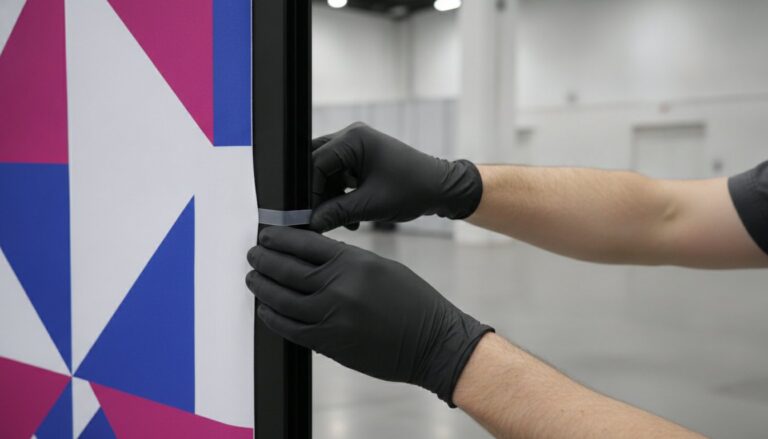
Absolutely, the modular nature of SEG systems makes them incredibly cost-effective for recurring exhibitors. You can simply peel out the old graphic and press the silicone edge of a new print into the existing frame’s channel. This allows you to update your marketing message or branding without investing in new hardware. It’s a fast, tool-free process that ensures your illuminated display remains relevant for every event in your 2026 calendar.