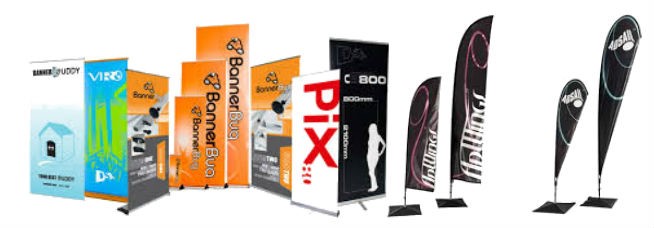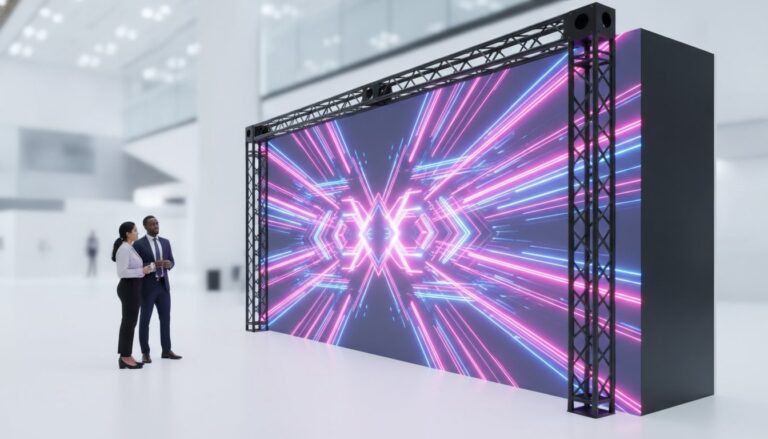
Benefits of Fabric Graphics over Vinyl: The Professional Comparison for 2026
The cheapest banner you buy today might actually be the most expensive asset you own by the time it reaches the exhibition centre. Whilst vinyl has long been the default choice for quick displays, the rising costs of logistics and the demand for flawless brand presentation have shifted the scales in favour of textiles. Understanding the benefits of fabric graphics over vinyl is no longer just about aesthetics; it is about protecting your bottom line. You have likely experienced the frustration of a “cost-effective” vinyl banner arriving with permanent creases or seeing your event photography ruined by distracting glare from overhead lighting. It is a common headache that compromises the professional image you have worked hard to build.
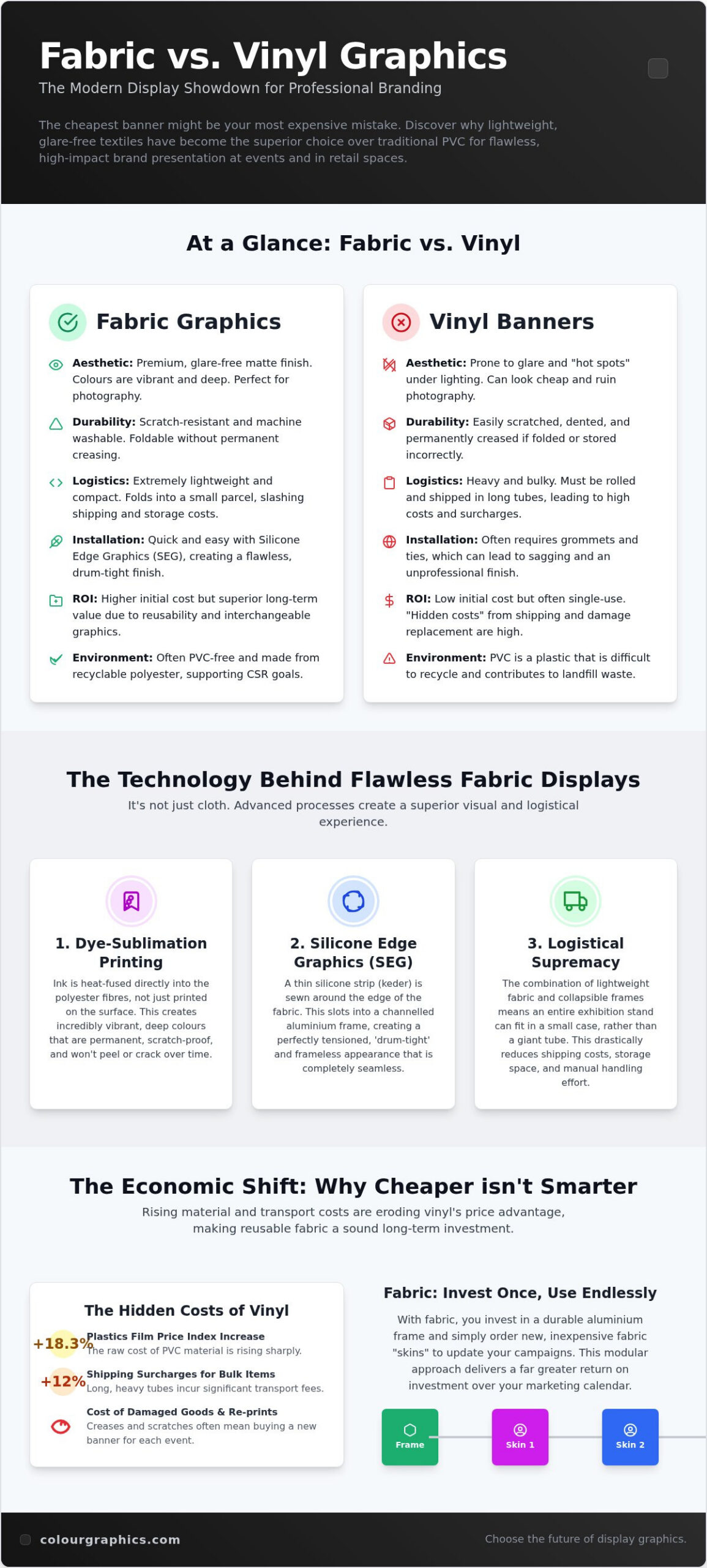
In this guide, you will discover why premium textiles are now the gold standard for high-impact retail and event spaces. With the producer price index for plastics film rising by 18.3% over the past year and shipping surcharges reaching up to 12%, the argument for lightweight, foldable, and reusable fabric has never been stronger. We will break down the technical advantages of Silicone Edge Graphics (SEG), explore the long-term ROI of textile displays, and show you how to organise your 2026 marketing calendar without logistical friction.
Key Takeaways
- Understand how dye-sublimation technology embeds colour directly into polyester fibres to create a glare-free, high-definition finish that excels under intense exhibition lighting.
- Discover the logistical benefits of fabric graphics over vinyl, specifically how foldable textiles can drastically reduce shipping costs and storage requirements compared to rigid rolls.
- Learn the technical advantages of Silicone Edge Graphics (SEG) and how the keder tensioning system creates a flawless, drum-tight display in seconds.
- Explore the environmental impact of transitioning to PVC-free materials, helping your business meet corporate social responsibility goals without compromising on visual impact.
- Find out how to maximise your marketing budget by utilising interchangeable fabric skins that allow for rapid, cost-effective updates to existing aluminium frames.
The Evolution of Display: Why Fabric is Overtaking Vinyl
The display industry is undergoing a fundamental transformation. While vinyl was once the undisputed king of large-format printing, the professional landscape in 2026 looks very different. Fabric graphics, specifically high-tension polyester displays, have emerged as the superior choice for brands that demand a premium edge. Unlike the industrial, plastic-heavy feel of traditional PVC, fabric offers a sophisticated texture that absorbs light rather than reflecting it. This shift is particularly evident in the luxury retail and corporate sectors, where the glare from glossy surfaces is now seen as a mark of low quality.
This transition is powered by the Dye-sublimation printing process, which fuses ink directly into the fabric fibres. This results in vibrant, deep colours that won’t scratch or peel. Retailers and high-end brands are now prioritising these matte, non-reflective surfaces to ensure their displays look perfect under harsh store lighting and in social media photography. In 2026, a “perfect” display isn’t just about size; it’s about how the surface interacts with the environment and the camera lens.
Understanding the Material Shift in UK Exhibitions
UK event organisers are leading the charge away from heavy, rigid PVC. It’s no longer just about the visual; it’s about the entire tactile experience. Modern brand positioning requires an atmosphere of quality and precision. Fabric displays provide a seamless, high-impact look that suggests craftsmanship and care, qualities often lost with the glossy, “temporary” appearance of vinyl banners. By moving away from rigid materials, organisers also reduce the risk of on-site damage, as fabric doesn’t scratch or dent during the high-pressure setup of a major exhibition. For retail spaces that require a more traditional, tactile feel alongside these modern fabrics, you can find out more about custom chalk menu boards as a versatile option.
When to Choose Fabric over Traditional Vinyl
Choosing between materials requires a strategic look at your environment. One of the primary benefits of fabric graphics over vinyl is their performance in high-traffic indoor areas. Trade shows, internal office branding, and fabric light boxes are the ideal environments for textiles. These settings benefit from the drum-tight finish and the ease of updating graphics without replacing entire hardware systems. Identifying the benefits of fabric graphics over vinyl helps marketing managers justify the switch to more sustainable, high-end materials that align with modern CSR goals.
Vinyl still serves a purpose, primarily for short-term outdoor hoardings or construction site fencing where weather resistance is the only priority. However, the aesthetic gap is widening. For any professional environment where the reader’s perception of quality matters, fabric has become the default. It’s a shift from seeing graphics as a consumable to viewing them as a long-term branding investment. You aren’t just buying a sign; you’re investing in a reusable asset that maintains its integrity use after use.
Aesthetic Excellence: Eliminating Glare and Enhancing Colour Depth
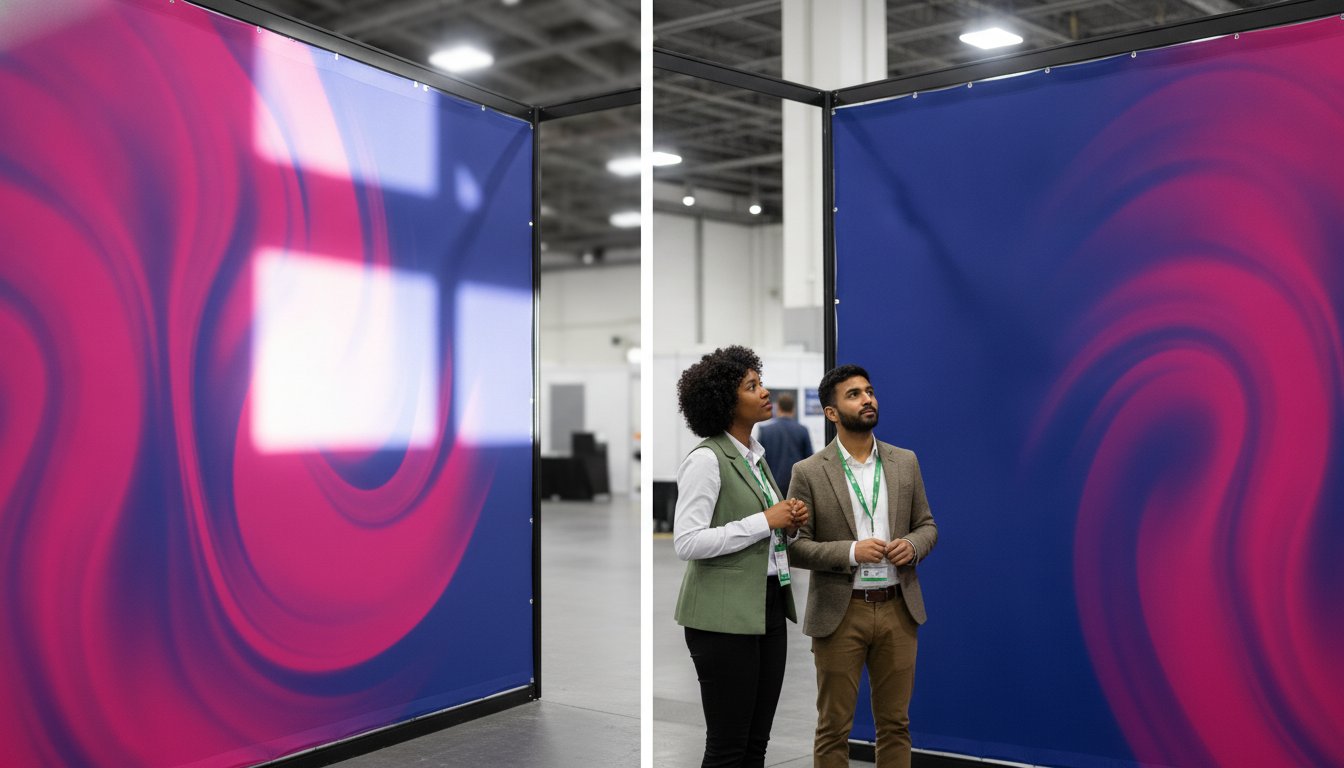
Visual clarity defines brand authority. One of the primary benefits of fabric graphics over vinyl is the total elimination of intrusive glare. Vinyl banners, particularly under high-intensity exhibition lighting, act like mirrors. They create “hot spots” that obscure your messaging and ruin professional photography. Fabric displays possess a natural matte finish that absorbs light, ensuring your branding remains crisp and legible from every angle. This is essential in a digital-first world where your stand will be photographed and shared across social media instantly; for design inspiration, Zodiac Event Displays provides a wealth of examples showing how high-impact banners can elevate a professional exhibition space.
Camera flashes and stage lighting often create “blind spots” on traditional PVC. When a visitor takes a photo in front of a vinyl backdrop, the flash bounces off the plastic surface, frequently washing out the logo or key text. Fabric solves this. By absorbing light, textiles provide a consistent, glare-free background that is perfect for hybrid events. Whether your audience is standing in the room or watching through a screen, the visual remains stable and professional. Whilst the logistical and shipping advantages of textiles are significant, the aesthetic payoff is what truly secures a premium brand position.
Dye-Sublimation vs Surface Printing
Dye-sublimation isn’t just a printing method; it’s a molecular bond. Traditional vinyl relies on surface printing, where ink sits on top of the substrate. This makes it prone to cracking when rolled or scratching during transit. In the dye-sublimation process, heat turns the ink into a gas, allowing it to permeate the polyester fibres before solidifying. The result is a graphic that is literally part of the material. It can be folded, washed, and stretched without any loss of detail or colour integrity. This creates a high-definition, photographic-quality image that maintains its “new” look for years.
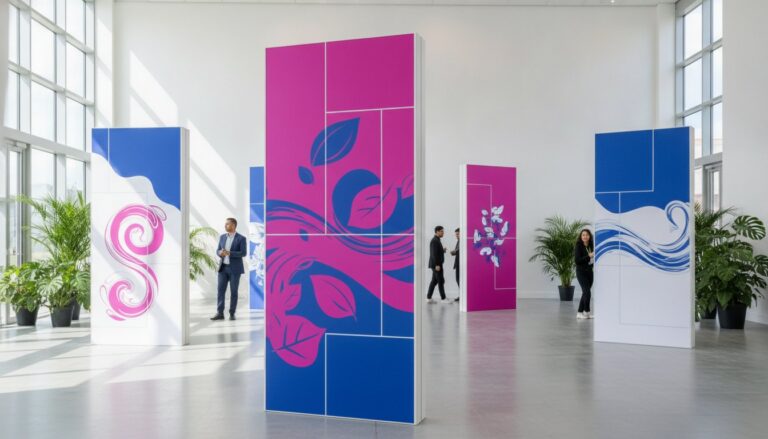
Backlit fabric light boxes offer a depth of colour that vinyl cannot match. Because the light is diffused through the fibres, the blacks are deeper and the gradients are smoother. There’s a common misconception that fabric colours appear dull compared to the high-gloss shine of vinyl. In reality, the absence of reflection allows the true pigment to show through, providing a richer, more cinematic visual experience. Understanding the benefits of fabric graphics over vinyl helps you choose materials that actually enhance your design rather than fighting against the room’s lighting. If you want to see this vibrancy in person, you might consider our bespoke Fabric Displays for your next project. It’s a simple change that delivers a massive impact on your brand’s perceived value.
Logistical Efficiency: Reducing Transport Costs and Storage Hassles
Logistics often dictate the success of a high-pressure marketing campaign. If you have ever paid a hefty surcharge for an “oversized” delivery, you already understand the hidden costs of traditional signage. One of the most overlooked benefits of fabric graphics over vinyl is the radical reduction in physical volume and weight. While 50 metres of heavy-duty vinyl is a cumbersome, 20kg beast that requires a rigid two-metre tube, the equivalent amount of fabric can be neatly folded into a standard small-parcel box. This shift from freight to courier delivery changes the financial equation of every event you attend.
The financial pressure is real. In July 2026, the USPS changed its dimensional weight divisor from 166 to 139, making large, lightweight packages significantly more expensive to ship. Combined with general rate increases from carriers like UPS and FedEx reaching effective totals of 7% to 12%, the ability to condense your displays into smaller footprints is a major competitive advantage. You’re no longer paying to ship air; you’re paying for the graphic itself. This efficiency isn’t just about the initial delivery; it’s about the entire lifecycle of your branding assets.
Foldable Graphics: The End of Heavy Cardboard Tubes
Small-parcel shipping does more than just save money. It slashes your carbon footprint and simplifies your storage strategy. You can now organise multiple seasonal campaigns in a single office drawer rather than dedicated warehouse racking. For UK firms exhibiting internationally, this portability is transformative. You can pack a full exhibition “skin” into a suitcase, avoiding the 21.5% increase in long-distance truckload freight costs reported in mid-2026. It’s a faster, leaner way to manage global brand consistency without the logistical friction of heavy PVC.
Durability and Maintenance: Washable Professional Displays
Stop worrying about “crease anxiety” during setup. Whilst vinyl graphics can be permanently ruined by a single fold or a deep scratch, fabric is remarkably resilient. Because the ink is embedded via dye-sublimation, these graphics are actually washable. If a “skin” gets marked during a frantic exhibition setup, you can simply wipe it down or put it through a cool wash. Once pulled tight over a tension frame, any minor fold lines vanish instantly. This durability ensures a fabric graphic lasts through far more event cycles than its vinyl counterparts. You aren’t just buying a temporary banner; you’re securing a long-term, reusable display solution that stays looking sharp, event after event.
Seamless Integration: The Power of Silicone Edge Graphics (SEG)
Precision engineering meets high-impact branding in Silicone Edge Graphics (SEG). This technology represents the gold standard for high-tension displays, providing a level of finish that traditional vinyl simply cannot match. The system relies on a “keder” strip—a thin silicone bead sewn directly onto the edge of the fabric—which locks into a recessed groove on an aluminium extrusion. This simple mechanical connection creates a massive shift in how brands approach their physical presence, moving away from temporary signage toward permanent, architectural-quality assets.
How SEG Extrusions Revolutionise Stand Setup
The move toward modular frames with interchangeable fabric skins is a primary driver behind the growing list of benefits of fabric graphics over vinyl. With vinyl, you often deal with heavy rolls, adhesive residues, or visible grommets that break the visual flow. SEG extrusions allow for a completely borderless look. Because the frame is a permanent asset, you only need to order new fabric “skins” for each campaign. This modularity reduces waste and allows your on-site team to update the display in minutes without specialised tools or the need for professional installation crews. It is a fast-moving, efficient solution for industries that cannot afford downtime.
Tension and Fit: Achieving a Drum-Tight Finish
The elasticity inherent in modern polyester blends is the secret to a flawless installation. When the keder is pressed into the frame, the fabric stretches slightly, pulling the surface into a drum-tight finish that eliminates every storage wrinkle. This creates a perfectly flat, professional plane that looks more like a solid wall than a printed cloth. You can explore various frame configurations in our comprehensive guide to banner stands to find the right fit for your professional space.
This level of integration provides genuine peace of mind. You know the graphic will fit perfectly every time because the dimensions are locked into the frame’s geometry. It removes the guesswork and the “make-it-work” attitude often required with sagging vinyl banners. If you are ready to upgrade your brand’s physical footprint, our specialist production of Silicone Edge Graphics ensures a result that is both meticulous and high-performing. You get a reusable, high-end display that reflects the precision of your own business operations.
Sustainability and Longevity: A Future-Proof Branding Investment
Sustainability is no longer a peripheral concern; it is a core business requirement for 2026. One of the definitive benefits of fabric graphics over vinyl is the move away from PVC-based materials. Polyvinyl Chloride (PVC) is notoriously difficult to recycle and often ends up in landfill after a single event cycle. In contrast, high-quality polyester fabrics align with corporate social responsibility (CSR) goals by supporting a “reduce and reuse” model. You aren’t just buying a display; you’re investing in a textile asset that can be repurposed across different hardware, from promotional flags to giant fabric light boxes. It’s a decisive shift from short-term spending to long-term asset management.
Eco-Conscious Printing and Material Recyclability
The dye-sublimation process uses water-based inks, which are far kinder to the environment than the solvent-based alternatives typically used for vinyl. Polyester fabrics are also significantly easier to recycle at the end of their lifecycle. By choosing a UK-based manufacturer like Colour Graphics, you also drastically reduce your “print miles” and associated transport emissions. We have been manufacturing in the UK since 1980, providing a reliable partnership that prioritises environmental consciousness without compromising on high-performance results. It’s a faster, greener way to manage your brand’s physical footprint whilst ensuring precision and quality.
Making the Switch with Colour Graphics
Transitioning from vinyl to fabric is a straightforward process that yields immediate dividends for your professional image. Start by auditing your current display assets; many existing frames can be retrofitted or replaced with long-term SEG systems that allow for rapid graphic swaps. The key to a successful transition lies in the quality of your source imagery. High-resolution files are essential for large-scale fabric printing to ensure the dye-sublimation process captures every detail of your brand with absolute clarity. Ready to upgrade? Explore our Silicone Edge Graphics for your next project.
The total return on investment for fabric is undeniable when viewed through a professional lens. When you factor in the 18.3% rise in plastic film costs and the 21.5% spike in freight prices observed in mid-2026, the benefits of fabric graphics over vinyl become a matter of fiscal responsibility. You save on shipping, you save on storage, and you save on replacement costs. Fabric doesn’t just look better; it works harder for your business. It is the smarter, more sophisticated choice for any firm looking to secure a premium position in a competitive market.
Securing Your Brand’s Visual Future in 2026
The transition from industrial PVC to high-tension textiles is a strategic move that pays dividends in both aesthetics and operations. By eliminating glare and embracing the vibrant depth of dye-sublimation, you ensure your brand remains the focal point of every room. The benefits of fabric graphics over vinyl extend far beyond the visual surface; they offer a smarter way to manage logistics through reduced shipping weights and simplified storage. You are no longer tethered to heavy, expensive cardboard tubes or prone to the “crease anxiety” that plagues traditional vinyl banners.
Investing in reusability through Silicone Edge Graphics (SEG) allows you to maintain a premium edge whilst meeting modern sustainability goals. Since 1980, we have focused on UK-based manufacturing and proprietary extrusion systems to provide businesses with the peace of mind that comes from high-end craftsmanship. Our high-impact dye-sublimation technology ensures that your graphics aren’t just seen, but remembered. Upgrade your display with premium fabric graphics at Colour Graphics to experience the difference of a high-capacity partner dedicated to your success. We are ready to help you transform your professional space with precision and reliability.
Frequently Asked Questions
Are fabric graphics more expensive than vinyl?
Fabric graphics usually have a higher initial purchase price than vinyl, but they offer a superior return on investment. You must consider the “landed cost,” which includes shipping and storage. Because fabric is lightweight and foldable, it avoids the expensive surcharges associated with oversized vinyl tubes. One of the key benefits of fabric graphics over vinyl is that the long-term savings on logistics and reusability often offset the higher starting price within just a few event cycles.
Can I use fabric graphics outdoors like a vinyl banner?
Fabric graphics are primarily designed for indoor professional environments, though specific products like feather flags are built for outdoor use. Standard fabric banners can withstand short-term outdoor exposure, but they don’t offer the same long-term weather resistance as heavy-duty PVC. For permanent outdoor hoardings or construction site signage, vinyl remains the practical choice. However, for any setting where aesthetic quality and glare reduction are priorities, fabric is the undisputed leader for professional brands.
How do I get the creases out of a fabric graphic after shipping?
Most creases disappear naturally once you install the graphic into a tension frame or Silicone Edge Graphics (SEG) system. The elasticity of the polyester pulls the surface drum-tight, smoothing out any fold lines from transit. If a stubborn crease remains, you can use a hand-held steamer or a cool machine wash. Unlike vinyl, which can be permanently damaged by folding, fabric is resilient and designed to be packed away tightly between uses without losing its professional finish.
Is fabric printing as sharp as high-resolution vinyl printing?
Dye-sublimation technology ensures that fabric printing is every bit as sharp as high-resolution vinyl. Because the ink is turned into a gas and bonded with the fibres, the resulting imagery is crisp, vibrant, and incredibly detailed. You won’t see the “surface” texture or ink-pooling that sometimes occurs with low-quality vinyl prints. This process allows for photographic-quality results that maintain their integrity even when viewed from a very close distance in high-end retail or exhibition settings.
Do I need a special frame for fabric graphics?
Yes, Silicone Edge Graphics require a compatible aluminium extrusion to achieve their signature borderless look. These frames feature a recessed groove where the silicone keder strip locks into place. While you can use fabric banners with traditional hanging systems, the most significant benefits of fabric graphics over vinyl are realised when using tensioned frames. These proprietary systems ensure a perfectly flat finish every time and allow for rapid, tool-free graphic changeovers by your own team.
Can fabric graphics be recycled in the UK?
Polyester fabrics are significantly more recyclable than composite PVC vinyls, which often end up in landfill. Many UK-based recycling centres can process clean polyester textiles, helping your business meet increasingly or corporate social responsibility goals. Because our manufacturing is based in the UK, we focus on providing materials that align with local environmental standards. Choosing fabric helps reduce the environmental footprint of your marketing activities whilst maintaining a high-end, professional aesthetic that traditional vinyl cannot match.
How long do fabric graphics last compared to vinyl?
Fabric graphics typically have a longer functional lifespan for indoor use because they don’t suffer from the cracking or peeling associated with aged vinyl. Since the ink is embedded in the material, the colours remain vibrant through multiple washes and event cycles. Vinyl is durable for outdoor weather resistance, but it becomes brittle over time when rolled and unrolled. Fabric remains supple and professional, making it the superior choice for any branding asset that needs to be used repeatedly.