2026 Guide to Reusable Exhibition Stands for Trade Shows
Investing in a one-off bespoke build for your next event isn’t just an environmental oversight; it’s a financial drain that could be costing your business up to 60% more than necessary over the next five years. You’ve likely felt the sting of paying for a stunning booth only to watch it head for a skip once the doors close. It’s frustrating to balance the need for a high-impact, professional presence with the logistical nightmare of storing heavy, rigid materials or the guilt of single-use waste. This 2026 guide reveals how to master the strategy of reusable exhibition stands for trade shows, ensuring your brand remains agile and impactful without the recurring price tag.
Transitioning to a modular approach gives you the precision of a custom build with the flexibility of a portable system. We’ll show you how to slash event costs and boost sustainability by leveraging high-impact fabric graphics and tool-free assembly. You’ll discover the technical nuances of Silicone Edge Graphics (SEG) and how these durable, lightweight solutions provide peace of mind during national transport. From understanding 2026 fire safety standards to scaling your footprint for different venues, this walkthrough provides the expert-level discourse you need to build a sustainable, high-performance event strategy.
Key Takeaways
- Learn how to transition from wasteful one-off builds to modular systems that can reduce your total cost of ownership by up to 60% over five years.
- Understand why Silicone Edge Graphics (SEG) are the industry standard for reusable exhibition stands for trade shows, offering a tool-free, precision fit for every event.
- Discover the logistical advantages of lightweight aluminium extrusions and fabric displays, which eliminate the high costs and environmental impact of traditional timber stands.
- Master the strategy of building a “graphic library” to effortlessly manage multiple show configurations and refresh your brand presence without reinvesting in hardware.
- Identify the benefits of partnering with a technical UK manufacturer to ensure colour consistency, high-performance durability, and fast national delivery.
Maximising ROI with Reusable Exhibition Stands for Trade Shows
The UK events market is undergoing a fundamental transformation. The era of the “build-and-burn” stand, where bespoke timber structures are commissioned for a single three-day event and then skipped, is effectively over. In 2026, event managers are prioritising precision and long-term value over one-off spectacles. By embracing the principles of modular design, exhibitors are gaining a level of agility that was previously impossible. This shift towards modularity allows a single hardware kit to adapt to varying floor plans. Whether you’re occupying a compact 3×3 metre shell scheme or a sprawling 6×3 metre island site, the same core components can be reconfigured to fit the space perfectly.
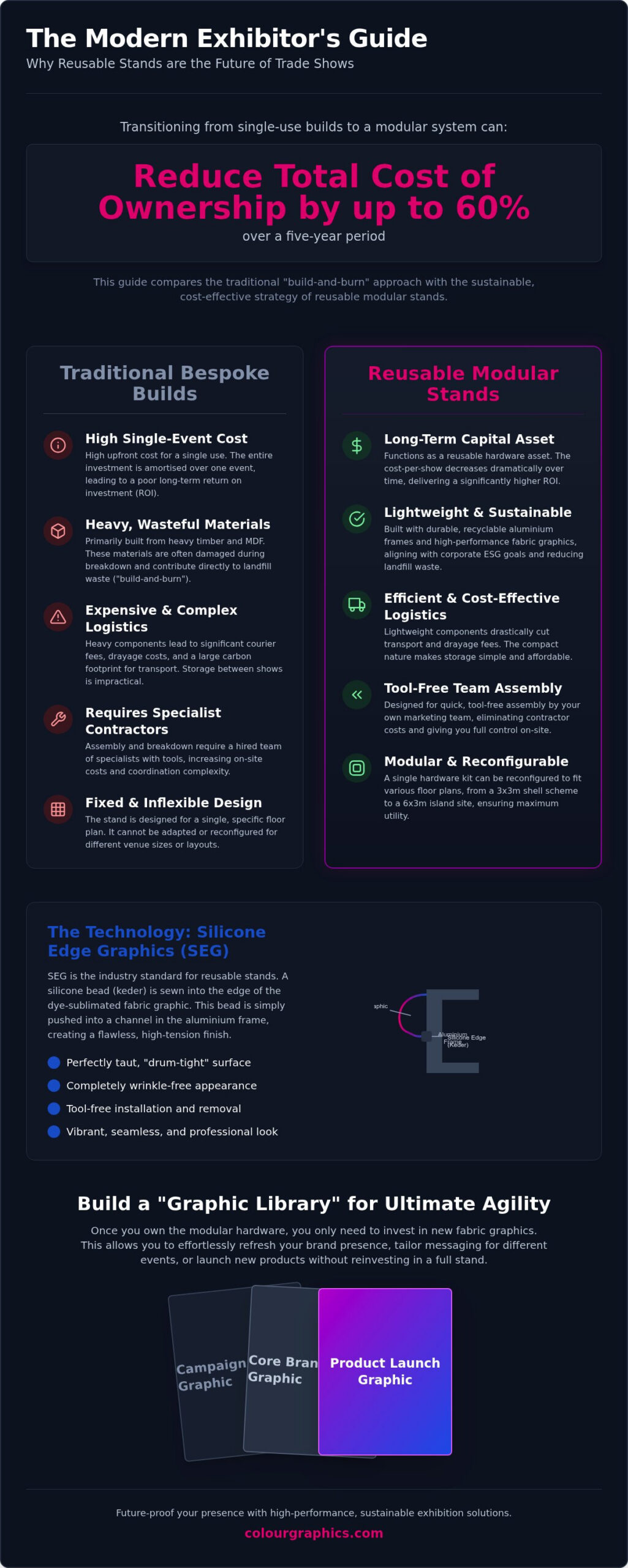
The financial logic is undeniable. Whilst a traditional bespoke build carries a high upfront cost that must be fully amortised in one show, reusable exhibition stands for trade shows function as a long-term capital asset. Industry data suggests that modular systems can reduce the total cost of ownership by 40% to 60% over five years. This isn’t just about saving money; it’s about reclaiming your marketing budget to invest in higher-quality graphics and better lead-generation technology.
The Economic Case for Reusability
Instead of viewing an exhibition stand as a disposable marketing expense, savvy businesses now treat it as a permanent hardware asset. This transition significantly lowers the cost-per-show over time. Beyond the initial hardware purchase, you’ll see immediate savings in logistics. Lightweight fabric systems and aluminium extrusions reduce transport weights compared to heavy MDF or timber, directly cutting your courier fees and drayage costs. Total Cost of Ownership for exhibition assets represents the sum of the initial purchase price plus all recurring costs for transport, storage, and graphic updates throughout the life of the hardware.
Sustainability in the Modern Trade Show Centre
Corporate sustainability goals (ESG) are no longer optional. Major venues and organisers are increasingly enforcing eco-friendly exhibit standards as we move through 2026. Reusable systems tackle the waste-to-landfill crisis head-on by replacing single-use timber with durable, recyclable aluminium frames and high-performance fabric substrates. This circular approach helps your business meet national carbon reduction targets whilst maintaining a premium brand image. You don’t have to compromise on impact to be eco-friendly; modern fabric graphics provide a high-tension, seamless finish that looks every bit as professional as a traditional build, without the environmental guilt.
The Mechanics of Reusability: Modular Frames and Silicone Edge Graphics
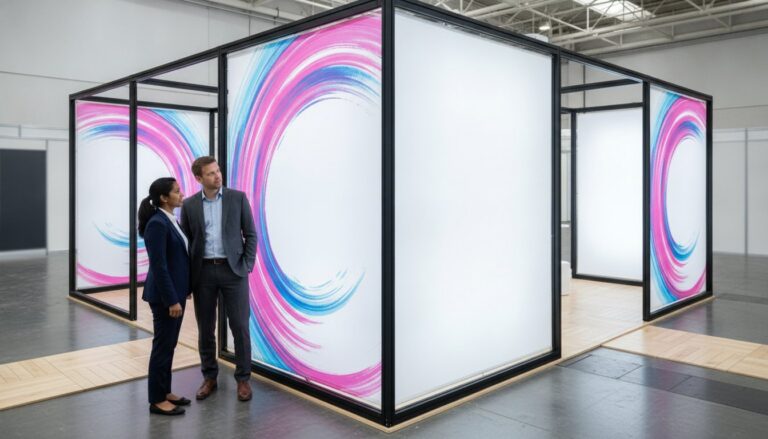
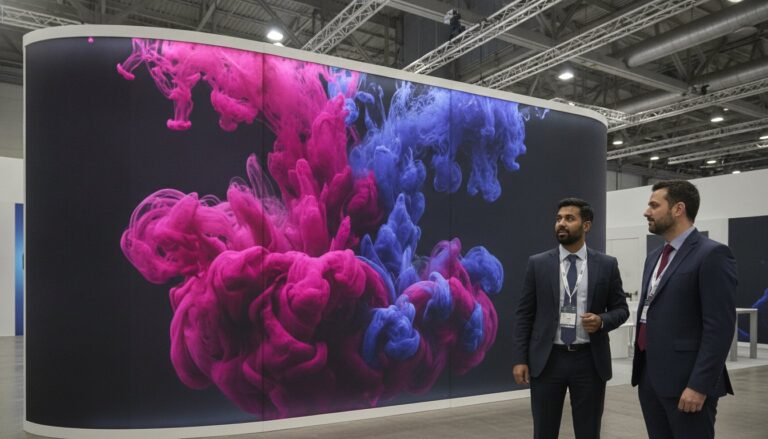
The true power of reusable exhibition stands for trade shows lies in the technical synergy between aluminium extrusions and tension fabric. Whilst traditional booths rely on heavy timber and screws, modern modular systems utilise high-precision Silicone Edge Graphics (SEG). This technology has become the gold standard for exhibitors who demand a high-end, bespoke appearance without the logistical burden of permanent joinery. The system is elegant in its simplicity. A lightweight aluminium frame provides the structural skeleton, whilst the fabric graphic acts as a vibrant, high-tension skin.
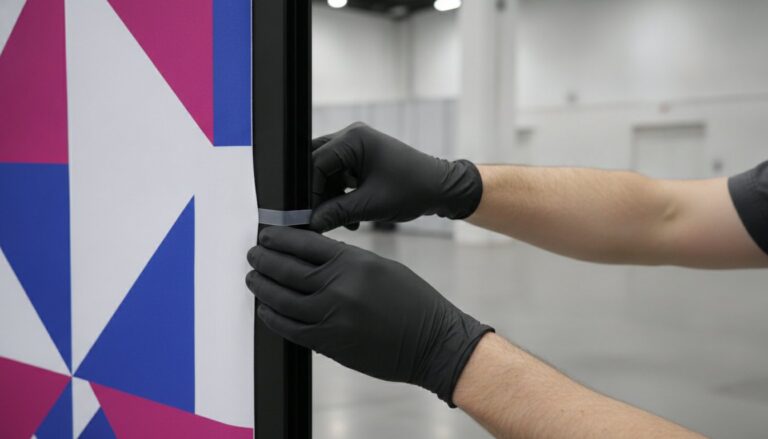
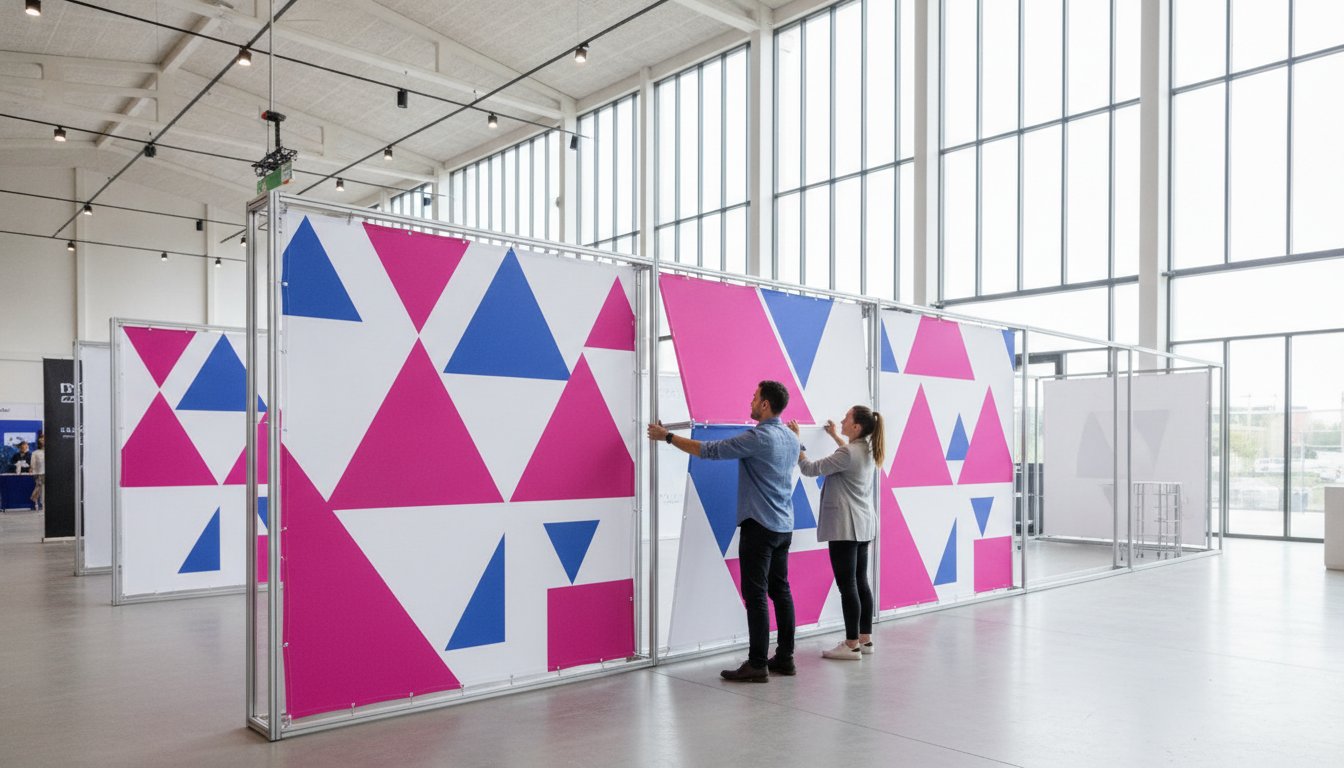
Assembly is remarkably straightforward. Most modular systems are designed for tool-free installation, allowing your marketing team to build a professional-grade presence in minutes. This autonomy removes the need for specialist contractors and ensures you’re ready for the show floor the moment you arrive. For those seeking a deeper dive into these systems, this comprehensive guide to reusable stands offers excellent context on the evolution of these materials and their benefits for long-term exhibiting.
Understanding SEG Technology
The magic of SEG is found in the silicone bead, often called a “keder,” which is sewn directly into the perimeter of the fabric. When pushed into the frame’s groove, it creates a drum-tight surface that is completely free of wrinkles. We use dye-sublimation printing for these graphics, a process that bonds the ink directly into the fibres of the material. This creates scratch-resistant, vibrant visuals that won’t crack or fade when folded. Unlike rigid Foamex or Dibond panels, fabric can be laundered, folded into a small bag, and transported across the country without risk of damage. If you’re looking for a technical partner to produce these high-performance visuals, exploring specialist Silicone Edge Graphics is the best way to ensure a precision fit.
Illuminated vs Non-Illuminated Modular Systems
Strategic lighting can transform a standard display into a high-impact focal point. Fabric light boxes use the same modular framework but integrate internal LED arrays to illuminate the graphic from behind. This creates an even, shadow-free glow that significantly increases your booth’s stopping power in a crowded hall. Because the LEDs are often pre-installed into the frame profiles or designed as plug-and-play components, you maintain the portability of a standard stand whilst gaining the visual authority of a permanent installation. Switching between illuminated and non-illuminated sections allows you to highlight specific product zones or brand messages with ease.
Comparing Reusable Modular Stands vs Traditional Bespoke Builds
Choosing between a bespoke timber build and a modular system is often framed as a trade-off between impact and convenience. This is a false choice. Modern reusable exhibition stands for trade shows deliver a level of precision that matches high-end joinery whilst offering vastly superior operational efficiency. Traditional timber structures are heavy, rigid, and prone to damage during transit. Every scratch on a painted MDF panel requires a specialist to repair it on-site. Conversely, aluminium frames are engineered for longevity. They withstand the rigours of national transport show after show, providing a consistent, high-performance foundation for your brand.
Lead times also separate these two approaches. A bespoke build typically requires months of design and construction time. If your campaign strategy pivots, you’re locked into a static physical structure. Modular systems allow for rapid brand evolution. You can update your entire visual presence in a matter of days by simply printing new fabric graphics, ensuring your booth always reflects your most current marketing objectives.
The Logistics Advantage
The hidden cost of traditional trade show materials lies in their volume. Shipping rigid crates across the country requires heavy-duty haulage and significant labour for loading and unloading. Fabric-based modular systems radically compress these shipping volumes. A full 6-metre back wall can often be transported in a single wheeled case. This reduction in weight and size doesn’t just lower your courier bills. It streamlines your entire event calendar by making national distribution faster and more reliable, allowing your team to move between venues with minimal friction. For companies aiming to take their presence further afield, Global Exclusive Trading (GET) can help facilitate the connection between domestic and international markets.
Agility is paramount for marketing teams in 2026. If you launch a new service mid-season, a bespoke timber stand would require a total repaint or reconstruction. With a modular system, you simply swap the graphic skin. This allows you to tailor your messaging for specific audiences or niche events without reinvesting in hardware. To add depth to a larger footprint or manage smaller pop-up activations, you can naturally integrate banner stands as supplementary units. These portable displays act as tactical extensions of your main stand, maintaining a unified brand centre whilst offering the flexibility to adapt to any floor plan size with ease.
How to Organise Your Graphics Strategy for Multiple Events
Mastering the use of reusable exhibition stands for trade shows requires more than just owning the hardware. It demands a proactive rotation strategy. To maximise your investment, you must transition from thinking about single events to managing a rolling inventory of visual assets. Start by auditing your 2026 event calendar to identify recurring booth dimensions. By categorising your shows into “small,” “medium,” and “large” footprints, you can develop a graphic library where panels are designed to be mixed and matched. This modular approach ensures your brand remains consistent whilst allowing you to pivot messaging for specific product launches or niche industry audiences.
Precision is vital during this planning phase. We recommend maintaining a detailed asset log that tracks the age and condition of every Silicone Edge Graphic (SEG) skin. Between shows, take the time to inspect your aluminium extrusions for any signs of wear and ensure all connectors remain in peak condition. This level of meticulous care provides the peace of mind that your stand will perform flawlessly the moment you arrive on-site. If you’re ready to build your 2026 inventory, you can order custom fabric graphics tailored to your specific modular configurations.
Planning for Different Stand Sizes
The “Master Skin” approach is the most efficient way to design for a varied event calendar. Start by creating a high-impact visual for your largest annual show. When designed correctly, segments of this master graphic can function as standalone panels for smaller 3×3 metre shell schemes later in the year. This prevents the need for entirely new sets of graphics for every venue. For tactical updates or last-minute campaign changes, utilising fabric banners allows you to introduce fresh messaging without altering your core infrastructure. These supplementary units are perfect for highlighting limited-time offers or specific regional services.
Maintenance and Longevity
Durable fabric graphics can last for dozens of shows if handled with care. To prevent permanent creasing, always fold your graphics with the printed side facing inwards and store them in a cool, dry environment. Whilst dye-sublimation prints are scratch-resistant, they can still pick up surface dust during busy installations. A handheld steamer is an essential tool for any event manager; it allows you to refresh the tension once the graphic is fitted to the frame, removing any transit lines in seconds. If a skin begins to lose its vibrant edge or shows signs of fraying around the silicone bead, it’s time to refresh your SEG library to maintain that expert-level professional discourse your brand deserves.
Future-Proofing Your Presence with Colour Graphics Fabric Solutions
Eliminating the middleman isn’t just about cost; it’s about technical control. When you source reusable exhibition stands for trade shows directly from a specialist manufacturer, you ensure that the hardware and the print are engineered to work in perfect unison. At Colour Graphics, we produce our own SEG extrusions and fabric skins under one roof. This proximity allows for a precision fit that third-party resellers simply cannot guarantee. Every millimetre of keder is tested against our proprietary frame profiles, providing you with a drum-tight finish that remains consistent across every venue on your 2026 tour.
Whilst fabric provides the core of your display, combining materials can add sophisticated texture and depth to your booth. You can integrate rigid accents by utilising foamex board printing for stand-off logos, structural shelving, or internal partitions. This hybrid approach allows you to maintain the portability of a modular system whilst benefiting from the high-impact tactile quality of professional PVC signage. It’s a strategy that provides the best of both worlds: the lightweight agility of fabric and the structural authority of rigid substrates.
The UK Manufacturing Edge
Our family-owned facility has been at the forefront of large-format production since 1980. We leverage premium dye-sublimation technology to ensure that your brand colours are reproduced with absolute fidelity. This process isn’t just about aesthetics; it’s about durability. Because the ink is thermally bonded into the fabric, your graphics can withstand the rigours of national transport without cracking or peeling. We understand the fast-paced nature of the events industry. Our UK-based manufacturing ensures that replacement skins or new campaign updates arrive on time, every time, giving you the peace of mind to focus on your show performance.
Next Steps for Your 2026 Event Calendar
Transitioning to a modular strategy is a decisive move toward professional readiness and fiscal responsibility. As you audit your upcoming shows, consider how to create a cohesive brand environment that extends beyond the back wall. You can enhance visitor engagement by integrating point of sale printing into your booth layout. From branded counters to interactive product zones—which can include high-end motion simulators from raceathome.co.uk—these elements turn a static display into a high-capacity marketing hub. Consulting with a print specialist early in your planning cycle ensures that your hardware specifications and fabric requirements are perfectly aligned with your 2026 commercial objectives.
Mastering your 2026 event presence requires a shift from disposable thinking to a focus on long-term asset management. Transitioning to modularity isn’t just about reducing your carbon footprint; it’s a strategic move that slashes recurring costs and empowers your marketing team with tool-free, high-impact displays. By investing in reusable exhibition stands for trade shows, you gain the flexibility to pivot your messaging instantly whilst maintaining a premium, bespoke appearance that commands attention on the show floor.
Our UK-based manufacturing facility ensures your graphics are produced with the technical precision only a specialist in Silicone Edge Graphics (SEG) can provide. Whether you require illuminated fabric light boxes or non-illuminated modular systems, our family-owned expertise ensures your brand arrives with total reliability. Explore our range of high-impact reusable exhibition graphics and modular systems at Colour Graphics and start building a more agile, high-performance event strategy today. Your brand deserves a presence as enduring as its reputation.
Frequently Asked Questions
Are reusable exhibition stands actually as durable as custom-built ones?
Reusable stands are often more durable than custom-built timber options because they utilise high-grade aluminium extrusions. Timber builds are susceptible to splintering and paint damage during transit, whilst aluminium frames resist wear show after show. When paired with high-performance fabric, these systems maintain a professional finish across dozens of events. They function as a permanent hardware asset, whereas timber booths are usually destined for disposal after a single use.
How long does it take to assemble a modular SEG exhibition stand?
Most modular SEG exhibition stands take between 15 and 45 minutes to assemble, depending on the complexity of the configuration. Because the system uses tool-free connectors and push-fit graphics, you don’t need a specialist build team. This speed is a significant advantage for exhibitors who need to set up quickly in busy halls. It allows your marketing team to focus on lead generation rather than struggling with heavy construction materials.
Can I change the size of my reusable stand for different trade shows?
You can easily scale your modular system to fit different floor plans by adding or removing individual frame sections. This inherent flexibility is the core benefit of reusable exhibition stands for trade shows. A kit designed for a 6×3 metre space can be reconfigured into a 3×3 metre stand for smaller regional events. You simply swap the fabric graphics to match the new dimensions, ensuring your brand presence remains consistent regardless of the venue size.
What is the best way to transport fabric graphics without damaging them?
The most effective way to transport fabric graphics is to fold them with the printed side facing inwards to protect the visual surface. Store them in a clean, dry bag or a lightweight wheeled case alongside your hardware. Unlike rigid Foamex or Dibond panels, fabric won’t crack or crease permanently during transit. If minor lines appear after shipping, a quick application of a handheld steamer on-site will return the tension to a drum-tight, professional finish.
Do I need a professional team to install a reusable modular stand?
You do not need a professional installation team to set up a modular reusable stand. These systems are specifically engineered for self-assembly using simple, tool-free locking mechanisms. Marketing teams can manage the entire process independently, which removes the high cost of site contractors. Whilst we provide the precision-engineered hardware and graphics, the straightforward nature of the SEG system ensures you can achieve a high-end, bespoke look without any technical construction experience.
Can reusable stands be illuminated with LED light boxes?
Reusable stands are perfectly compatible with LED illumination through the use of fabric light boxes. These units use the same modular framework but incorporate internal LED arrays to make your graphics glow from within. This significantly increases your visibility in a crowded exhibition centre. Because the lighting components are often pre-installed or plug-and-play, you gain the visual impact of a permanent illuminated structure whilst retaining the portability of a modular fabric display.
Is it possible to recycle the fabric graphics once a campaign is over?
Many modern fabric substrates are fully recyclable, contributing to a circular event economy. Once a specific marketing campaign ends, you can often send the polyester-based graphics to specialised textile recycling facilities. This transition away from PVC and timber helps your business meet national sustainability targets for 2026. By choosing reusable exhibition stands for trade shows, you significantly reduce the volume of waste sent to landfill compared to traditional one-off exhibition builds.
How much can I save by switching to a reusable exhibition stand model?
Switching to a reusable model can reduce your total cost of ownership by 40% to 60% over a five-year period. Whilst the initial investment in aluminium hardware is higher than a single-use stand, the recurring costs for subsequent shows are limited to transport and occasional graphic updates. You’ll also save on storage fees and labour costs because the lightweight materials are easier to handle and require less space than heavy timber crates or rigid panels.