Exhibition Stands for Solo Set-up: A Professional Guide
Imagine arriving at a bustling exhibition hall with nothing but a single carry case and the quiet confidence that your display will be live in minutes. For many, the reality of sourcing exhibition stands for one person setup is far more stressful; it often involves wrestling with heavy crates, hunting for missing hex keys, and the lingering fear that a messy assembly will undermine your brand’s authority. You shouldn’t have to choose between a professional presence and a manageable workload. We understand that the physical strain of heavy equipment and the complexity of multi-person builds can drain your energy before the first visitor even arrives.
This guide will help you master the art of solo exhibiting by focusing on high-impact, tool-free solutions designed for efficiency. We’ll show you how to secure a premium presence that takes less than 15 minutes to assemble and fits comfortably into a standard vehicle. You’ll learn how to leverage lightweight aluminium frames and tension fabric technology to create a sophisticated space that looks like it required a full installation crew. From understanding the benefits of Silicone Edge Graphics to selecting the most durable UK-manufactured hardware, we’ll provide the technical insight you need to remain fast-moving and meticulous on the trade show floor.
Key Takeaways
- Identify the essential criteria for solo-friendly displays, prioritising tool-free assembly and lightweight frames that fit easily within standard UK vehicles.
- Compare the technical advantages of different exhibition stands for one person setup, including why Silicone Edge Graphics (SEG) provide a more premium, flush finish than traditional alternatives.
- Master the logistics of solo exhibiting by understanding weight-to-impact ratios and professional packing techniques that protect your graphics during transit.
- Learn how to organise your exhibition space alone using a proven order of operations that keeps aisles clear and ensures your lighting and graphics are perfectly aligned.
- Discover the benefits of UK-manufactured hardware and proprietary SEG extrusions that offer long-term durability for the self-sufficient exhibitor.
Defining the Solo-Friendly Exhibition Stand
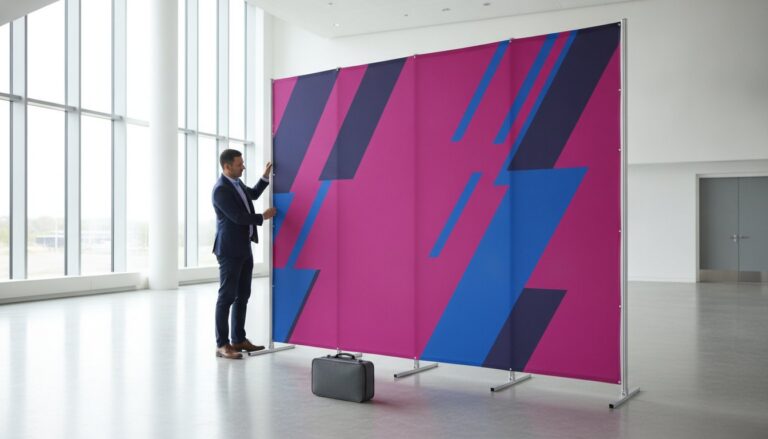
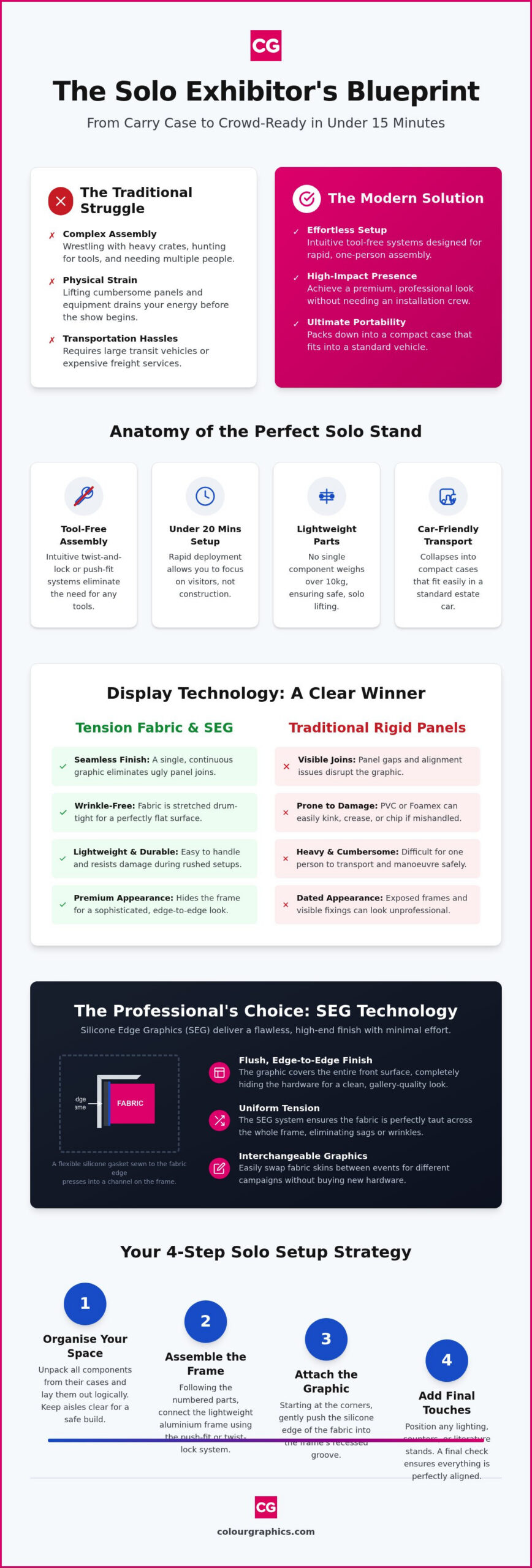
Solo exhibiting requires a strategic approach to hardware. You need a system that eliminates technical friction while maintaining a high-impact aesthetic. A solo exhibition stand is a modular display system designed for tool-free assembly by a single individual within 20 minutes. By adhering to modular design principles, modern stands allow for rapid deployment without a secondary pair of hands. The primary goal is independence. You shouldn’t be reliant on venue staff or complex toolkits to get your message across.
Portability is the cornerstone of this independence. In the UK, most solo exhibitors rely on standard estate cars or small vans to transport their equipment. If a stand requires a dedicated pallet or a large transit vehicle, it fails the solo-friendly test. A truly manageable system collapses into compact, protective cases that one person can lift and manoeuvre through narrow event hall aisles. This “pack-down” size is just as critical as the final assembled dimensions. It dictates whether you can handle the logistics yourself or if you’re forced to pay for expensive freight services.
Key Features to Look For
When evaluating exhibition stands for one person setup, precision in the locking mechanisms is vital. You should look for frames that utilise intuitive twist-and-lock or push-fit technology. These systems provide a secure connection without the need for screwdrivers or allen keys. Weight management is another non-negotiable factor. For safe, solo lifting, ensure no single component exceeds 10kg. This prevents physical strain during the build process. High-quality kits will always include padded carry cases with heavy-duty wheels. These cases protect your investment and make the journey from the car park to the exhibition floor effortless.
The Shift to Tension Fabric
The transition from rigid panels to fabric has revolutionised solo exhibiting. Traditional PVC or Foamex panels are often cumbersome and prone to kinking if handled incorrectly by one person. Tension fabric is significantly more forgiving. It’s lightweight, durable, and resists the accidental damage that often occurs during a rushed setup. Because the fabric is stretched tight over an aluminium frame, it creates a perfectly flat surface every time.
One of the greatest professional advantages is the elimination of visible joins. Multi-panel stands often suffer from alignment issues where the graphics meet. Tension fabric displays use a single, continuous graphic that wraps around the frame. This ensures a seamless, high-definition finish that looks like it was installed by a professional crew. Modern dyes and crease-resistant materials mean your graphics stay vibrant and sharp, even after being folded away in a transit bag for months. This reliability gives you the peace of mind to focus on your visitors, rather than worrying about your backdrop.
Top Stand Types for One-Person Assembly
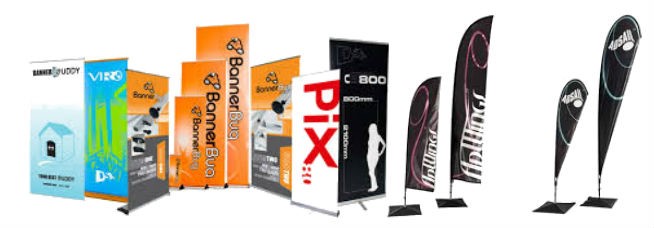
Selecting the right hardware is the first step in any successful trade show preparation guide. For those working alone, the choice usually falls between three categories: Roller Banners, Pop-Up Displays, and SEG Fabric Stands. While a banner stand remains the quickest solo option for tight spaces, your choice should reflect your brand’s long-term goals. High-quality exhibition stands for one person setup should offer modularity. This allows you to start with a single frame and link additional units together as your business expands and your floor space requirements grow.
SEG (Silicone Edge Graphics) Displays
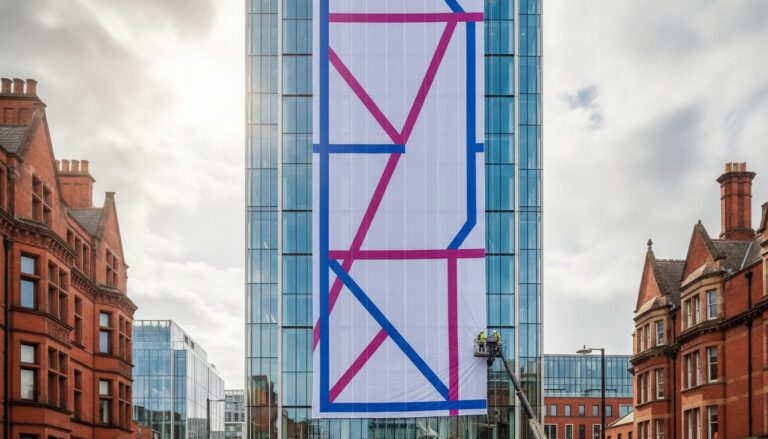
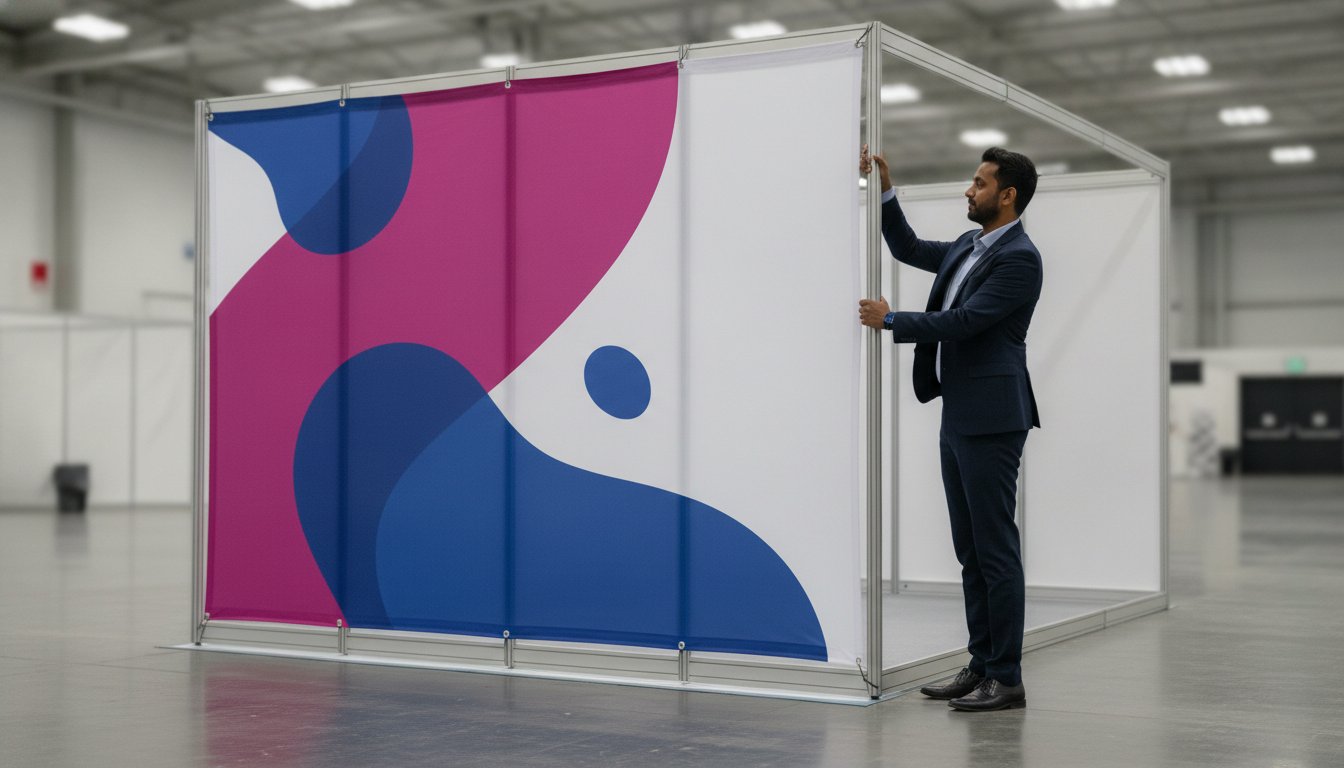
SEG technology represents the pinnacle of modern, solo-friendly design. These systems use a push-fit silicone gasket that you simply press into a recessed groove on the aluminium frame. This creates a drum-tight, wrinkle-free finish that looks significantly more premium than traditional PVC panels. Because the tension is uniform across the entire surface, you won’t struggle with sagging or misalignment during the build. The technical superiority of SEG lies in its flush, edge-to-edge finish, which hides the frame entirely from the front.
Interchangeable graphics are a major advantage here. You can swap fabric skins between events to suit different marketing messages without purchasing a new frame. Whether you choose a freestanding unit for an island site or a wall-mounted frame for a shell scheme, the assembly remains a straightforward, one-person task. If you’re looking for a professional edge, our Silicone Edge Graphics offer the precision you need for a high-impact presence.
Traditional Pop-Up Stands
The classic “concertina” frame remains a staple for a reason. Its lightweight aluminium structure expands in seconds, providing a large-scale backdrop with minimal physical effort. When choosing between magnetic bar systems and hook-and-loop fasteners, solo exhibitors should prioritise magnets. Magnetic systems automatically pull the graphic panels into the correct position; this is far easier than trying to align Velcro strips perfectly by yourself. It ensures your graphics meet seamlessly without the frustration of manual adjustments.
Most of these kits come with a hard-shell carry case that serves a dual purpose. By adding a simple wrap and a wooden top, you can convert your transit case into a branded podium in under two minutes. This provides a professional greeting point and a secure place to store your personal items without the need to carry extra furniture. It’s a clever way to maximise your equipment’s utility whilst keeping your transport load light.
Logistics: Transportation and Weight Considerations
Successful exhibiting relies on more than just visual appeal; it requires a deep understanding of weight-to-impact ratios. For a single operator, every extra kilogram represents a physical and financial cost. Adhering to exhibition industry best practices means selecting hardware that balances durability with extreme portability. A standard 3×3 fabric pop-up typically weighs less than 15kg including the frame and graphic. This low weight profile ensures you can move from the loading bay to your stand without waiting for a trolley or hiring additional help. By minimising bulk, you reduce the risk of injury and ensure your energy is reserved for the event itself.
Protecting your investment during transit is a critical part of the logistics chain. Graphics that arrive creased or scuffed immediately undermine your professional authority. High-performance exhibition stands for one person setup should always include dedicated, padded transit bags that isolate the graphics from the metal framework. This prevents the friction that causes ink transfer or fabric tears. When you manage your own logistics, you maintain total control over the condition of your display, avoiding the rough handling often associated with third-party couriers.
Car Boot Compatibility
Frame length is often the deciding factor for vehicle choice. Whilst large, one-piece roller banners can be awkward in a standard hatchback or saloon, modular SEG frames are far more versatile. These aluminium extrusions break down into shorter sections, making them easy to pack into tight spaces. When loading your car, always place the heaviest frame components at the bottom of the boot. Secure your graphics on top to prevent shifting during transit. Using bungee cords or non-slip mats prevents equipment from sliding; this protects both your vehicle’s interior and the precision-engineered frames from unnecessary impact.
Manual Handling for the Solo Exhibitor
Independence shouldn’t come at the cost of physical strain. Safe lifting is essential when you’re the only person on-site. Always lift with your legs and keep the load close to your body to avoid back injury. Organising your setup sequence is equally important for efficiency. Start by unloading your wheeled carry cases and moving them directly to your designated “setup zone” in one trip. This strategy minimises the number of journeys back to the car park and keeps your area tidy. For supplementary signage, consider foamex board printing. It provides a lightweight, rigid solution for headers or information panels that won’t add significant bulk to your kit, allowing you to maintain a high-impact presence without needing a large crew.
Strategic Setup: Organising Your Space Alone
Efficiency on the event floor begins with a clear spatial strategy. When you’re managing exhibition stands for one person setup, your first task is to establish a “setup zone” within your designated shell scheme or floor space. By keeping all components, tools, and transit bags within this boundary, you ensure that event aisles remain clear and safe for other exhibitors. This meticulous organisation prevents the stress of searching for misplaced items whilst maintaining a professional image from the moment you arrive. It’s about working smarter, not harder.
A disciplined order of operations is vital for a smooth build. Always assemble your frame first to establish the structure of your display. Once the skeleton is in place, install your lighting. Doing this before applying graphics allows you to hide cables behind the frame without risking damage to the printed media. Finally, apply your graphics to achieve that drum-tight, professional finish. You can easily supplement your main display with fabric banners to create a high-end backdrop with minimal physical effort. These additions provide depth and additional branding surface without requiring a secondary installer.
Managing the “behind-the-scenes” clutter is a common challenge for soloists. Use the space behind your fabric graphics or inside a branded counter to store packing materials, coats, and personal belongings. Keeping your footprint tidy is essential for inviting engagement. If you’re ready to upgrade your event presence, explore our range of professional fabric displays designed for effortless assembly.
Efficient Time Management
Success is often measured by the 30-minute challenge. Your goal should be to complete your entire setup before the morning rush of attendees. To achieve this, a pre-show dry run at your office or home is essential. It allows you to familiarise yourself with the hardware and identify any potential troubleshooting needs without the pressure of a live event. If a component feels stiff or a graphic seems misaligned, you’ll have the time to resolve it calmly. This preparation ensures that on the day, your focus remains entirely on your visitors.
Maximising Impact in Small Spaces
When floor space is limited, you must use height to your advantage. Taller stands draw the eye from across the hall, making your brand visible even in crowded environments. Place your branded counter strategically at the front edge of your space. This invites engagement without blocking access to your main display. Simple clip-on LEDs are another high-impact addition. They can double the perceived value of your stand by highlighting key messages and ensuring your graphics remain vibrant under dull venue lighting. These small, technical details transform a basic booth into a premium brand experience.
Premium Fabric and SEG Solutions from Colour Graphics
At Colour Graphics, we specialise in empowering self-sufficient exhibitors through precision engineering. Our range of exhibition stands for one person setup is manufactured right here in the UK, ensuring that every frame meets rigorous quality standards before it reaches your door. By focusing on advanced vinyl printing and tension fabric technology, we provide displays that are not only visually striking but also incredibly durable. We don’t offer on-site installation because we don’t need to; our hardware is designed so intuitively that you retain total control over your brand’s presentation from start to finish. This independence is a core benefit of our system.
Fast national delivery is a cornerstone of our service. We understand the high-pressure nature of event planning and the tight deadlines that often accompany trade shows. Our UK-based manufacturing facility allows us to turn orders around quickly and reliably, giving you the peace of mind that your equipment will arrive exactly when you need it. You aren’t just buying a stand; you’re partnering with a family-owned specialist that has been perfecting large format print since 1980.
Our SEG Extrusion Range
The core of our fabric display system is our proprietary SEG extrusion. Unlike generic frames found elsewhere, our extrusions are designed for maximum rigidity whilst remaining lightweight. You can choose between non-illuminated frames for a classic, high-end look or our fabric light boxes to truly command attention on the hall floor. These illuminated options use integrated LED technology to make your graphics pop without adding any complexity to your solo build. Because our silicone edge graphics use a precise gasket system, they provide a perfectly seamless, professional appearance every time. These frames are built for the long haul, designed to withstand the rigours of multi-show use over many years.
Support for the Independent Exhibitor
High-impact exhibiting relies on print quality that stands up to close inspection. Our high-resolution digital printing ensures your brand colours are vibrant and your text is razor-sharp. This is essential when visitors are standing just inches from your display during a consultation. We also recognise that marketing messages evolve. That’s why we make re-ordering graphics for your existing frames a straightforward process. You can refresh your look for a new campaign or a different target audience without the expense of purchasing new hardware. Our expert team is always available to provide advice on material selection, ensuring your stand performs perfectly under any venue lighting conditions.
Mastering Your Solo Event Strategy
Exhibiting alone doesn’t mean compromising on brand impact. Success lies in selecting lightweight, tool-free hardware that prioritises portability without sacrificing a premium finish. By mastering the logistics of transport and following a disciplined setup sequence, you can transform a complex build into a manageable 20-minute task. Choosing high-performance exhibition stands for one person setup gives you the freedom to focus on what matters most; building relationships with your visitors.
At Colour Graphics, we’ve been expert large format printers since 1980. We manufacture our frames in the UK to ensure total quality control, utilising proprietary SEG extrusions for a seamless, professional appearance. Our systems are engineered specifically for self-sufficient professionals who demand reliability and speed. You’re ready to take total control of your event presence.
Explore our range of solo-friendly exhibition stands at Colour Graphics and discover how our precision-engineered displays can streamline your next show. We’re here to help you succeed on your own terms.
Frequently Asked Questions
Can one person really set up a 3×3 exhibition stand alone?
Yes, a single individual can comfortably assemble a 3×3 exhibition stand without assistance. Modern fabric pop-up displays are designed with lightweight aluminium frames that concertina out in seconds. Because the graphics are often pre-attached or use simple magnetic bars, there’s no need for a secondary pair of hands to hold panels in place. This makes them ideal exhibition stands for one person setup in shell scheme spaces.
How long does it take to assemble a tension fabric display?
Most tension fabric displays can be fully assembled in 10 to 20 minutes. The process involves clicking the aluminium frame sections together and then stretching the fabric “sock” or graphic panel over the structure. Because these systems use push-fit connections rather than complex fixings, the build is fast and intuitive. This rapid deployment allows you to spend more time preparing your promotional materials and engaging with early visitors.
What is the most portable type of exhibition stand for car travel?
Modular SEG frames and fabric pop-ups are the most portable options for car travel. These systems break down into small, manageable sections that fit into padded carry cases, easily sliding into the boot of a standard hatchback. Unlike rigid panels that require a van, these fabric-based solutions are lightweight and compact. They’re specifically engineered for the self-sufficient exhibitor who needs to transport their entire kit in a personal vehicle without risking damage.
Do I need any special tools to assemble an SEG stand?
You don’t need any tools to assemble a professional SEG stand. The frames utilise push-fit or twist-lock mechanisms that secure the aluminium extrusions by hand. The Silicone Edge Graphics are then pressed into a recessed groove on the frame using a simple silicone gasket. This tool-free approach eliminates the stress of carrying heavy toolkits and ensures you won’t be caught out by missing hex keys or screwdrivers on-site.
How do I prevent my fabric graphics from creasing during transport?
To keep your graphics looking sharp, always roll your fabric panels rather than folding them tightly. Many modern displays use crease-resistant polyester, which naturally smooth out once the fabric is under tension on the frame. If you do notice minor fold lines, they typically disappear within an hour of assembly as the material stretches. Storing your graphics in a dedicated, clean transit bag protects them from friction and dirt during the journey.
Are lightweight stands sturdy enough for busy trade show environments?
Yes, these stands are engineered for high-traffic environments. Whilst they’re lightweight for transport, the aluminium extrusions and weighted feet provide excellent stability on the event floor. Our UK-manufactured frames are designed for longevity, ensuring they don’t lean or wobble when bumped by passing attendees. Choosing high-quality exhibition stands for one person setup ensures you have a robust, reliable presence that lasts for years of multi-show use without losing its structural integrity.
What happens if I need to update my graphics for a new show?
Updating your message is a simple and cost-effective process. You don’t need to replace the entire hardware system; you can simply order new fabric skins or SEG panels for your existing frames. This flexibility allows you to tailor your branding for specific audiences or seasonal campaigns whilst reusing the same durable aluminium structure. It’s a sustainable and budget-friendly way to keep your event presence fresh and relevant for every show.
How do I clean or maintain my fabric exhibition graphics?
Most fabric graphics can be cleaned with a cool, gentle machine wash or a simple wipe down with a damp cloth if they become marked. It’s important to avoid harsh chemicals or high-heat drying, as this could damage the print or shrink the material. Once clean, ensure the graphics are completely dry before storing them in their transit bags. Regular maintenance keeps your display looking vibrant and professional for years of successful exhibiting.